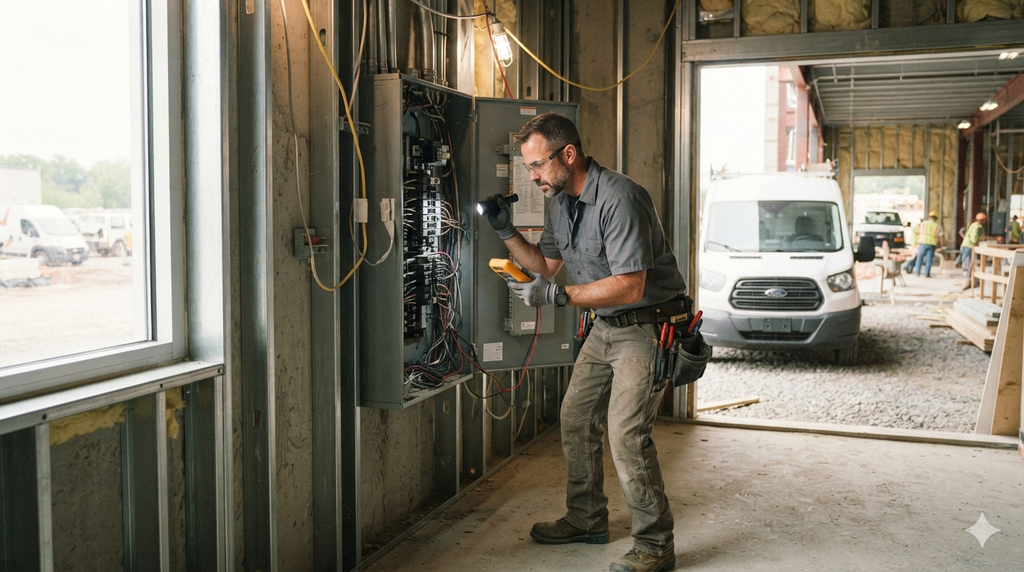
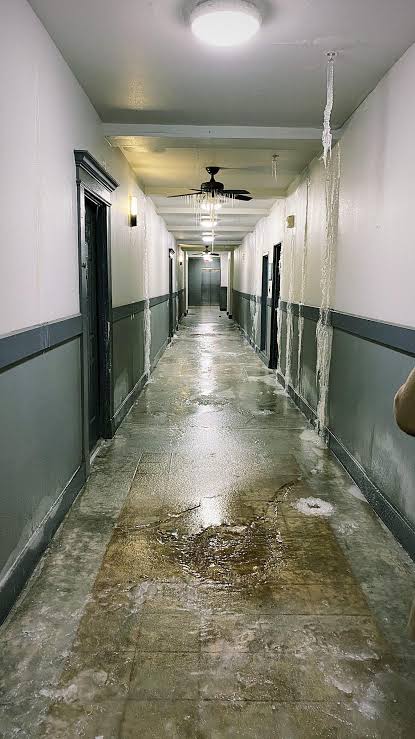
Construction in Chicago doesn’t stop when temperatures drop. Framing, drywall, and concrete work often continue under tarps and plastic sheeting with temporary heaters running around the clock. However, that setup keeps a schedule on track, but it also concentrates several distinct risks in one partially finished building. Builder’s risk insurance can help with the build.
Matching Winter Risks to the Right Policy
Risk
Coverage that usually responds
What to confirm
Fire damaging the structure or stored materials
Builder’s risk insurance
Any heater or fire safety conditions written into the policy
Fire or smoke spreading to a neighboring property
General liability
Limits that fit a dense block with attached buildings
A worker overcome by carbon monoxide
Workers’ compensation
That every crew, including subs, carries their own coverage
Pipes freezing in an unfinished space
Builder’s risk, depending on terms
Whether the policy requires heat to be maintained
The Conditions Many Contractors Overlook
Some builder’s risk policies include protective safeguard requirements, such as keeping heaters attended, maintaining clearances from combustibles, or having extinguishers on each floor. These aren’t suggestions. Falling short of a written condition can complicate a claim, so it’s worth reading that section before the first cold snap.
A Short Cold-Weather Site Routine
Keep heaters clear of tarps, lumber, and insulation
Ventilate enclosed areas and use carbon monoxide detectors
Assign someone to check heaters at the end of each shift
Store propane cylinders according to the manufacturer’s and code guidance
Weer Insurance Group works with contractors across Chicago, from Portage Park to the collar counties, to line up general contractors’ insurance that fits year-round work. To review your builder’s risk insurance conditions before winter, stop by our Belmont Avenue office or reach out through Weer Insurance Group in Chicago, IL.
Why Plumbing Carries Big Insurance Risks—And Why It Matters to Your Bottom Line
Plumbers face some of the toughest insurance challenges in the trades. It’s not just about injuries on the job. It’s about the damage your work can cause if something goes wrong.
A burst pipe. A missed shutoff valve. A ruptured line during installation. Any of these can mean $50,000 in water damage to a customer’s home or office. That’s not a claim. That’s a catastrophe.
Add in the fact that plumbers work in tight residential spaces—basements, crawl spaces, roofs—and you’ve got fall risks and back injuries that happen every day. According to the National Center for Construction Education and Research (NCCER), plumbers experience occupational injuries at 128 per 10,000 workers annually. That’s higher than most trades.
Here’s the reality: You need two separate insurance programs. Workers’ compensation covers your crew when someone gets hurt. Commercial auto covers your fleet when an accident happens between jobs. Ignore either one, and a single claim can wipe out your profit for the year.
Let’s break down what you actually need.
What Should Your Commercial Auto Policy Include?
Your commercial auto program must address three specific risks in plumbing work:
Your service trucks and vans
Your fleet is on the road constantly. Between emergency calls. Supply runs. Scheduled jobs. You need comprehensive and collision coverage. You need commercial general liability. You need medical payments coverage. And in Chicago’s winter weather? Uninsured motorist coverage is essential.
Why? Because Chicago drivers don’t always carry adequate insurance. A rear-end collision in your service van costs thousands—not just in vehicle repair, but in lost service days and equipment damage.
Hired and non-owned auto coverage (HNOA)
Most plumbers miss this one. Here’s the situation: A technician uses their personal pickup to grab supplies from the wholesale distributor. A subcontractor shows up in their own van for emergency work. An accident happens.
Who’s liable? You are.
HNOA coverage protects you when employees or subcontractors use personal vehicles for business. Ask for it explicitly. Many carriers don’t include it automatically. This is one of the most critical gaps we see in plumber policies—don’t be caught without it.
Liability limits that match your market
General contractors and property managers expect plumbing subcontractors to carry $1 million per occurrence liability. If your limit is $500K, you’re either paying out-of-pocket for higher coverage on each bid, or you’re losing jobs.
Check your limits now. It costs just a few dollars more per year to meet the market standard. Why lose a job over this?
What Actually Drives Your Workers’ Comp Cost in Illinois?
Illinois requires workers’ compensation if you have even one employee. Period. It’s mandated under 820 ILCS 305, the Workers’ Compensation Act.
But here’s what most plumbers don’t understand: Your cost isn’t fixed. It’s based on three factors.
Factor 1: Payroll
The more workers you hire, the higher your premium. Workers’ comp is calculated as a percentage of payroll. If your annual payroll jumps from $200,000 to $300,000, your premium goes up. It’s straightforward math.
Factor 2: Your claims history (the e-mod)
This is where it gets interesting.
Carriers assign you an “experience modification factor,” or e-mod. It’s a multiplier. Plumbers with clean records pay close to the base rate—maybe 0.85× (a 15% discount). Plumbers with multiple claims pay a surcharge—maybe 1.15× or 1.25× (a 15–25% increase).
Here’s the kicker: One serious claim affects your rate for three years. A technician scalded by a burst? That’s on your record. A back injury from improper lifting? That follows you.
But on the flip side, a three-year clean record? That discount adds up fast.
Factor 3: Safety practices
Carriers track patterns. According to OSHA’s guidance on plumbing hazards, multiple back injuries signal poor lifting protocols. Repeated scalding incidents suggest inadequate burn protection. Slips in crawl spaces indicate insufficient safety equipment.
When you invest in OSHA-approved plumbing safety training, proper PPE (burn gloves, slip-resistant boots, back support), and confined-space protocols, you don’t just protect your crew. You save thousands in premiums.
Bottom line: Don’t expect a flat fee. Your cost depends on your payroll, your claims history, and your safety record. That’s why working with an experienced insurance agent—one who understands plumbing operations—matters.
A Real Claim Story from Chicago
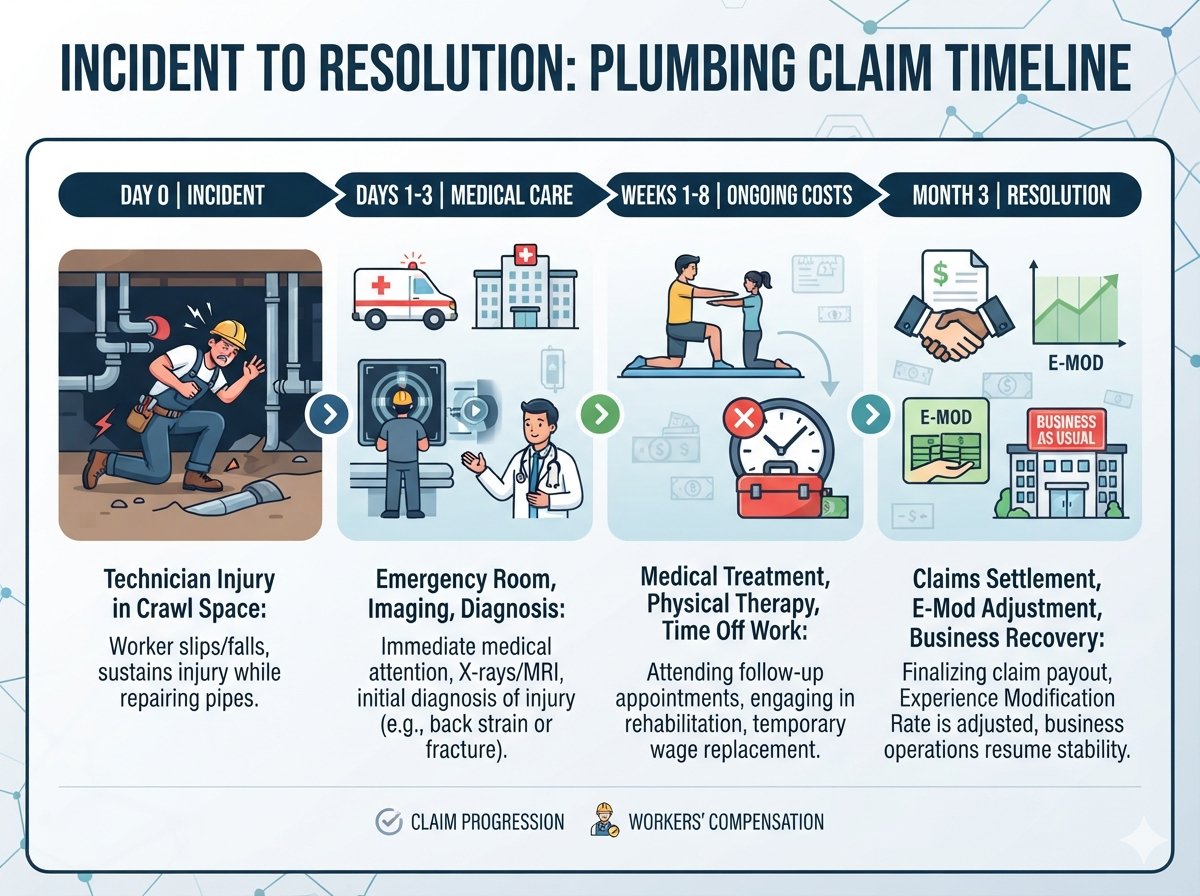
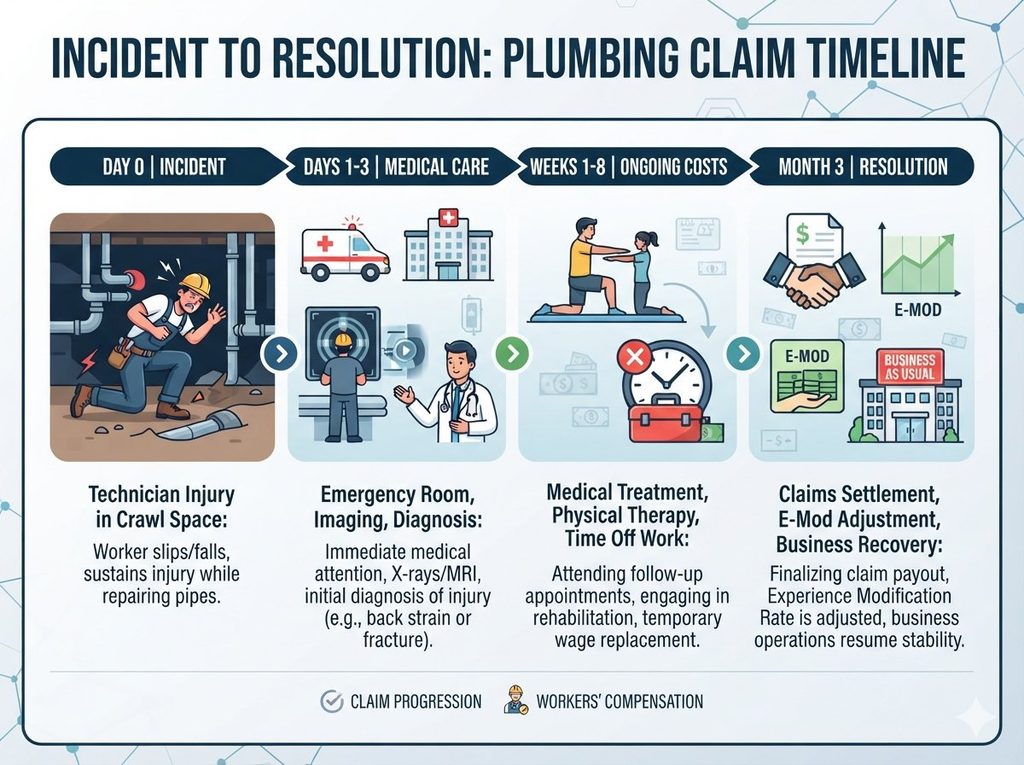
A residential plumbing contractor on the South Side runs a three-person crew. November. Cold snap. He gets called to a residential building with a burst pipe in a crawl space.
One technician works in a stooped position for an hour. Removing the frozen section. Accessing tight spots. Then—sharp pain in his lower back. He can’t straighten up.
Urgent care. MRI. Diagnosis: Herniated disc. Restrictions: No lifting over 10 pounds for six weeks. Physical therapy. Two months off work.
If he didn’t have workers’ comp:
The technician would sue him directly. Medical bills? Out of pocket—$8,000 for imaging and therapy. No paychecks for two months? That comes from the business. With two technicians left, he loses winter emergency calls—peak season for plumbing. Premiums skyrocket at renewal—20%+ increase for three years.
Total damage: Over $40,000 plus lost revenue.
If he had proper coverage:
Workers’ compensation covered everything. The carrier handled the claim. The technician got his wages while recovering. The e-mod adjustment at renewal? Modest. Around 1.05. The business stayed operational.
He also had commercial auto coverage because one technician had been hit earlier that year while parked at a customer’s home. That accident? Handled under the fleet policy. Not a personal claim.
Two separate incidents. Two separate programs. Business survives intact.
Certificates of Insurance: The Paperwork That Stops You From Working
Property managers and general contractors won’t let you start work without a Certificate of Insurance on file.
More than that? Many want it dated within 30 days. Some request updates monthly during long projects.
What does a COI prove? That you’re covered for workers’ comp, general liability, and commercial auto.
What happens without it? You’re off the job site. Mid-project. No exceptions.
What if it’s outdated? You’re shut down. That means the blocked toilet or leaking pipe sits unfixed while you scramble to get your insurance updated.
That’s a relationship killer.
Smart plumbers make this automatic:
First, ask your agent for same-day turnaround on certificates. Some carriers now offer self-service portals where you download them instantly.
Second, request a fresh COI before you think you’ll need it. Build a buffer into your workflow.
In Chicago’s competitive residential market, being the plumber who shows up with paperwork ready is the plumber who gets the repeat call.
We’ve spent years building partnerships with 30+ carriers that specialize in trades insurance.
We understand plumbing. We know back injuries and scalding are everyday hazards. We know winter ramps up your revenue and your exposure at the same time. We know Illinois law. And we know that a missing COI can cost you more than the insurance itself.
Whether you’re a solo technician adding your first helper or a growing firm managing multiple service trucks, we build a program that covers your workers, your fleet, and your reputation.
Ready to lock in your coverage before winter?
Contact us at 773-545-2001 or visit our About page to learn more about how we serve Chicago contractors. Now is the time to make sure your paperwork is current and your coverage is solid.
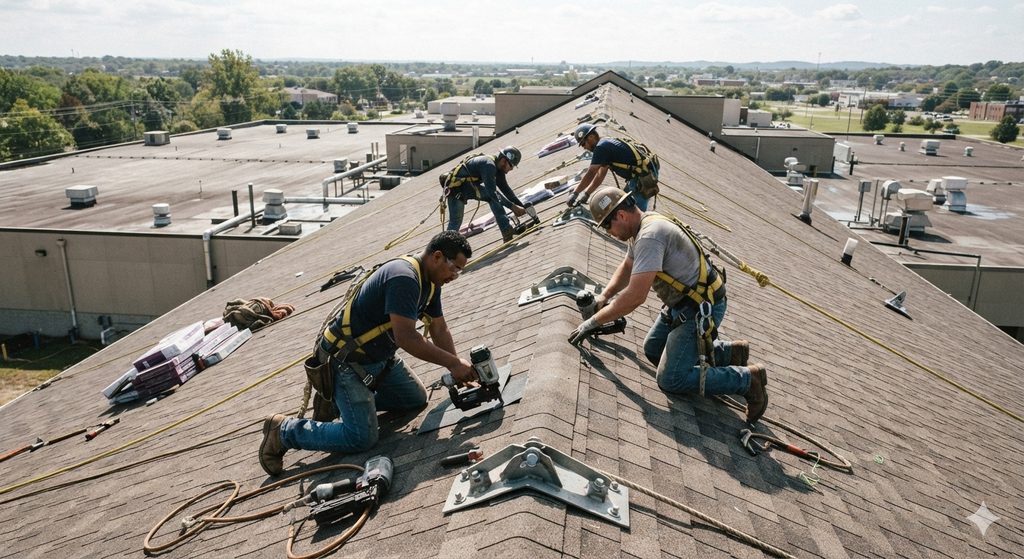
Quick answer: Roofing is the single most cited trade in federal OSHA fall-protection enforcement. It also has one of the three highest-rated workers’ compensation classifications in construction (NCCI code 5551). This combination means roofing contractors typically pay more for insurance than almost any other trade. However, those who document safety programs and control EMR can save thousands annually. They can further lower costs with up-to-date subcontractor certificates and proper coverage, including roofing contractor insurance Chicago.
Why roofing insurance costs more than almost any other trade
Additionally, factors such as jobsite risk and training requirements raise premiums for roofing contractor insurance Chicago.
Roofing sits at the top of two lists no contractor wants to lead: OSHA enforcement and workers’ comp rating.
According to federal OSHA enforcement data, roofing contractors were cited at a rate of 86.5 citations per 100 inspections in fiscal year 2025 — the highest of any construction trade, ahead of framing (83.5), siding (43.6), plumbing and HVAC (24.2), masonry (20.4), and electrical (19.3). Roofing alone accounted for more than half of the 5,914 federal fall-protection citations issued that year, at an average penalty of roughly $7,320 per citation. Fall protection (29 CFR 1926.501) has been OSHA’s most-cited standard nationwide for 15 consecutive years running, and roofing is the biggest reason why.
On the workers’ compensation side, NCCI class code 5551 (“Roofing — All Kinds and Drivers”) is rated among the three most expensive classifications in the entire construction industry. Insurance carriers price this code high because the loss data supports it: falls from roofs and ladders produce more severe, more expensive claims than almost any other type of construction injury — long-term disability, multiple surgeries, and wrongful death claims are all more common in roofing than in trades that work primarily at ground level.
Add Chicago’s weather cycle — hail and wind damage claims spike every spring and summer, followed by a rush of tear-off and re-roof work before winter — and you get a trade where both frequency (how often something goes wrong) and severity (how expensive it is when it does) are working against you at renewal time.
The coverage a Chicago roofing contractor actually needs
A complete roofing insurance program typically includes six pieces. Skipping any one of them is usually what causes a claim to become a lawsuit, or a signed contract to fall through when a general contractor’s risk manager reviews your certificate of insurance.
General liability (GL). Covers third-party bodily injury and property damage — a dropped tool that dents a car, a tear-off that lets water into a client’s home before the new roof goes on. This is the policy every general contractor and property manager will ask to see on your certificate of insurance before you’re allowed on a job site.
Workers’ compensation. Mandatory in Illinois for virtually every employer with even one employee, and priced primarily off your payroll in class code 5551 and your experience modification rate. This is usually the single largest line item in a roofer’s insurance budget.
Commercial auto. Covers the trucks and trailers hauling ladders, shingles, and tear-off debris between job sites — a personal auto policy will not cover a vehicle titled to or primarily used for the business, and it will exclude the tools and materials riding in the bed.
Inland marine (equipment coverage). Protects ladders, lifts, nail guns, and other tools and equipment that move between job sites rather than sitting in one fixed location — standard property insurance does not follow equipment off-premises.
Umbrella / excess liability. Sits on top of your general liability, auto, and employers’ liability limits. Given the size of recent “nuclear verdict” jury awards in construction injury cases, most brokers now recommend $3–10 million in umbrella coverage for roofing contractors doing any meaningful volume of commercial work, not just the $1 million in primary GL that used to be considered sufficient.
Completed operations coverage. A leak that shows up eight months after a roof is finished is still your liability. Make sure your GL policy’s completed operations coverage doesn’t have a roofing-specific exclusion or sublimit buried in the form — this is one of the most common gaps we find when we review a roofer’s existing policy.
What drives your premium up or down
Factor
Why it matters
Experience modification rate (EMR)
The single biggest lever on your workers’ comp premium. An EMR above 1.00 can add tens of thousands of dollars a year; staying at or below 1.00 signals a strong safety record to underwriters.
Residential vs. commercial mix
Commercial and multi-family roofing carries different liability exposure than single-family residential work, and carriers price the two differently.
Documented fall protection program
Written procedures, harness and anchor point documentation, and toolbox-talk records give an underwriter something concrete to price against — “we’re careful” is not a rating factor, a program is.
Subcontractor use and their COIs
If you use subs and don’t collect and verify their certificates of insurance, their claims can flow back onto your policy — and your own GL premium reflects that exposure whether or not a sub ever gets hurt.
Payroll, revenue, and years in business
Standard rating factors, but roofing’s severity means small changes here move the needle more than they would in a lower-hazard trade.
Storm/CAT claim history
A book of hail and wind damage repair work brings its own claims pattern that carriers track separately from routine installation work.
The Certificate of Insurance problem that costs roofers bids
Every general contractor, property manager, and municipality in the Chicago area now runs subcontractor COIs through compliance checks.
These checks occur before starting work, and roofing subs get flagged more often than almost any other trade.
Common issues involve the limits, named insured, or timing in roofing contractor insurance Chicago COI submissions.
Additional insured endorsement missing or worded incorrectly. A GC’s contract almost always requires the roofer’s GL policy to name the GC as an additional insured on a primary and non-contributory basis — a standard certificate holder line isn’t enough.
Waiver of subrogation not included, which many commercial contracts and property management agreements require by name.
Excluded operations. Some policies carry a roofing exclusion or a steep-slope/height sublimit that isn’t obvious until a claim is denied or a compliance reviewer catches the endorsement.
Umbrella limits that don’t match the contract. A $1M/$2M primary policy with no umbrella is increasingly a non-starter on commercial and multi-family bids in Chicago, where $3–5M in total limits is becoming the baseline ask.
If you’ve ever had a bid held up — or lost outright — because your COI came back with a red flag, the fix almost always happens at the policy-drafting stage, not the moment the certificate is requested. That’s a conversation worth having with your agent before your next bid deadline, not after.
Five steps to a stronger roofing insurance program before renewal
Pull your EMR and understand what’s driving it. If it’s above 1.00, ask your agent to walk through exactly which claims are affecting the calculation and for how much longer they’ll stay on your experience period.
Put your fall protection program in writing. Underwriters price documented programs differently than verbal ones. A one-page written policy plus a log of harness inspections and toolbox talks is often enough to move the needle.
Audit your subcontractor COI file. Every sub on every job should have a current certificate on file naming you as additional insured, with a waiver of subrogation where your contracts require it.
Check your completed operations and roofing-specific endorsements line by line. Don’t assume a “general liability policy” from a prior carrier automatically covers roofing operations at full limits — ask specifically.
Revisit your umbrella limits against what your actual contracts require. If you’ve moved from mostly residential to more commercial and multi-family work, your umbrella needs have probably grown with it, even if no one has flagged it yet.
Frequently asked questions
How much does roofing contractor insurance cost in Illinois? Cost depends heavily on revenue, payroll, EMR, and the residential-versus-commercial mix of your work, so there’s no single number that applies to every roofer. The most reliable way to know where you stand is a same-apples-to-apples comparison against your current program — not a rate you saw somewhere online.
Is workers’ compensation legally required for roofing contractors in Illinois? Yes. Illinois requires workers’ compensation coverage for virtually all employers with employees, including sole proprietors who have even one employee working with them, and roofing’s class code 5551 is rated among the highest in construction.
What is an experience modification rate (EMR) and why does it matter so much for roofers? Your EMR compares your company’s workers’ comp claims history to other companies doing similar work. An EMR of 1.00 is exactly average for the class code; below 1.00 means better-than-average claims experience and a lower premium, above 1.00 means worse-than-average experience and a higher one. Because roofing’s baseline claims severity is already high, EMR swings tend to move actual dollars more than they would in a lower-hazard trade.
Do I need an umbrella policy if I already have $1 million in general liability? For most roofing contractors doing any commercial, multi-family, or municipal work in the Chicago area, yes — many contracts now require $3–5 million or more in combined limits, and a $1 million primary policy alone often won’t satisfy that requirement.
Why did my certificate of insurance get rejected by a general contractor? The most common reasons are a missing or improperly worded additional insured endorsement, no waiver of subrogation where the contract requires one, a roofing exclusion or height/steep-slope sublimit buried in the policy, or umbrella limits that fall short of what the contract specifies.
Get your roofing insurance program reviewed before your next bid
Weer Insurance Group works with artisan contractors and roofing companies across Chicago, the north and northwest suburbs, and into Wisconsin and Indiana, and we specialize in exactly this kind of coverage review — EMR analysis, additional insured and waiver of subrogation language, umbrella limits, and subcontractor COI compliance. If a certificate of insurance has ever held up one of your bids, or you simply haven’t had your program reviewed against current contract requirements in a while, we’re happy to take a look.
Weer Insurance Group is an independent insurance agency with offices in Chicago and Spring Grove, Illinois, serving contractors throughout Illinois, Wisconsin, and Indiana.
Image recommendations for this post
For SEO and AI-search visibility in 2026, original/custom photography consistently outperforms generic stock imagery — search engines and AI crawlers increasingly treat stock photos as low-value filler, while real, specific images add genuine evidence that the content is authentic and locally relevant. Recommended images for this post, in priority order:
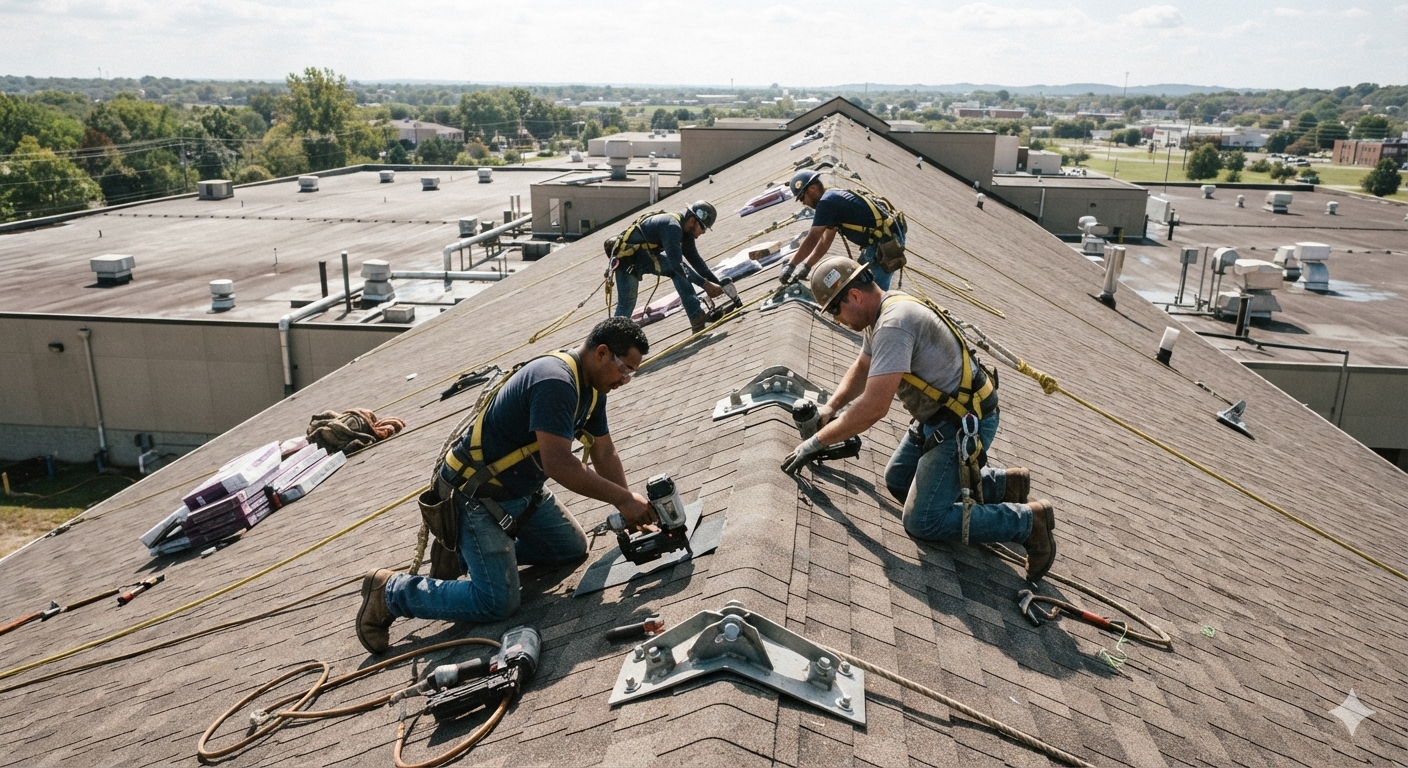
Featured/hero image: An original photo of an actual roofing crew at work on a steep-slope or commercial roof, ideally with visible fall-protection equipment (harnesses, anchor points) — ties directly to the article’s lede and signals real expertise rather than a generic “guy on a roof” stock photo. If a real jobsite photo isn’t available, a photo with a recognizable Chicago skyline or neighborhood in the background adds local relevance.
Suggested alt text: “Roofing contractor wearing fall-protection harness working on a commercial roof in Chicago”
Supporting image for the cost-drivers section: Turn the cost-factor table into a simple branded graphic (a clean chart or icon-based infographic) rather than a screenshot of a spreadsheet — infographics that visually explain a process or set of factors are specifically called out as strong performers for both user engagement and AI-search extraction.
Suggested alt text: “Chart showing what drives roofing contractor insurance premiums up or down”
Supporting image for the COI section: A simple annotated screenshot or graphic of a certificate of insurance with the additional insured and waiver of subrogation fields highlighted — annotated screenshots that clarify a specific document or process perform well and are easy for readers (and AI systems) to interpret correctly.
Suggested alt text: “Certificate of insurance showing additional insured and waiver of subrogation endorsements”
General rules to apply to whichever images are used: keep alt text under 125 characters and specific to what’s actually shown (not just “roofing insurance”); use short, hyphenated, descriptive file names with local and topical keywords; add a one-line caption under the hero image; and add ImageObject structured data (with contentUrl, caption, and creditText) alongside the existing Article/FAQPage schema on the page. Avoid purely decorative stock photography (people shaking hands in suits, generic clipboard-and-hardhat stock shots) — it adds no evidence value and increasingly reads as filler to both readers and AI crawlers.
Sources
U.S. Occupational Safety and Health Administration (OSHA), federal fall-protection enforcement data, fiscal year 2025
National Council on Compensation Insurance (NCCI) classification data, class code 5551 (Roofing — All Kinds and Drivers)
HVAC technicians face some of the highest injury rates in skilled trades. Moreover, the Bureau of Labor Statistics shows non-fatal injuries among heating and air-conditioning workers at 130 per 10,000 annually. This is more than twice the rate for all construction trades.
Additionally, falls from ladders and roofs are everyday hazards. Moreover, burns from furnaces and refrigerant exposure, and repetitive strain injuries, are also common. This is why HVAC insurance Chicago is important for contractors.
However, the insurance picture doesn’t stop at the job site. Your exposure has two critical touch-points:
Workers’ compensation covers your crew when someone gets hurt on a job—whether that’s a technician burned during a furnace install, a helper falling off a ladder, or a driver injured while servicing a rooftop unit.
Commercial auto insurance protects your fleet when the risk moves. Your service vans and trucks traveling between jobs, loaded with expensive tools and equipment, are rolling business assets that need specific coverage—especially if employees or subcontractors use their personal vehicles for work.
Ignore either one, and one bad incident can wipe out a year’s profit or sink your company entirely.
What Should Be in Your Commercial Auto Policy?
Your commercial auto program needs to address three layers of HVAC fleet risk:
Service trucks and vans. Your primary fleet is likely your most valuable and most-driven asset. You need comprehensive and collision coverage (especially if financed), commercial general liability, and medical payments. In Chicago’s dense urban routes and winter weather, uninsured motorist coverage is essential.
Hired and non-owned auto (HNOA) coverage matters for HVAC insurance Chicago. If a technician uses a personal pickup to grab parts, you’re liable for accidents. Subcontractors arriving in their own vans can create liability gaps for your projects. A clear HNOA policy helps close those gaps during on-site service and repairs.
HNOA coverage bridges those gaps and protects you when employees or subs operate personal vehicles for work. Many policies don’t include this by default; ask for it explicitly. Ensure your policy reflects your active fleet and contractor practices. This attention improves claims handling and liability management.
Liability limits that match your market. General contractors routinely require HVAC subcontractors to carry $1 million per occurrence/$2 million aggregate auto liability before stepping onto a commercial site. If your current limits are $500K/$1M, you’re either paying out-of-pocket to bump them up or losing bids. Verify your limits when you quote jobs; it costs just a few dollars more per year to meet the market standard.
What Drives Workers’ Comp Cost for HVAC Contractors in Illinois?
Illinois requires all employers with one or more employees to carry workers’ compensation insurance, as mandated under 820 ILCS 305. The state doesn’t set a flat rate; instead, your cost depends on three primary factors:
Payroll. The larger your crew, the higher your premium. Workers’ comp is calculated as a percentage of payroll (the “rate” per $100 of payroll), so adding a technician directly increases your annual cost.
Experience modification factor (e-mod). This is the multiplier that reflects your claims history. Contractors with no or few claims pay close to the state baseline rate. Contractors with multiple injuries or high-cost claims pay a surcharge (e.g., 1.15 or 1.25× the base rate). One serious claim can affect your e-mod for three years. Conversely, a clean record earns a discount (e.g., 0.85×).
Safety practices and incident trends. Even before a claim settles, carriers and risk consultants track which contractors experience recurring incidents. A history of falls, burns, or vehicle accidents signals poor safety culture—and insurers price that risk accordingly. Investing in OSHA-approved training, fall protection equipment, and vehicle maintenance protocols doesn’t just save lives; it saves thousands in premiums over time.
Don’t expect a simple answer like “HVAC contractors pay $X per year.” Your cost is unique to your payroll, claims history, and underwriting profile. Work with an experienced agent who will request your last three years of payroll and loss history to get an accurate quote and identify cost-reduction opportunities.
A Real Claim Story
A commercial HVAC contractor in Pilsen with five technicians was called to replace a furnace in a residential property in November. The job involved removing the old unit from a basement and installing a new high-efficiency model on the first floor. One technician was carrying the old furnace down the basement stairs when he slipped on a wet step, fell backward, and fractured his collarbone and several ribs. The injury required emergency room care, two weeks off work, and six months of physical therapy.
Without proper coverage: The technician would have sued the contractor directly, claiming negligence. The company’s medical costs alone ($18,000 for ER and imaging) would come out of pocket. Workers’ comp premiums would spike—likely a surcharge of 25% or more on future renewals for three years. The crew would be short-handed during winter, the busiest season. Total impact: close to $75,000 in direct costs plus lost revenue.
With proper coverage: Workers’ compensation covered all medical and lost-wage benefits. The contractor’s insurance carrier handled the claim, and the business stayed insured. The claim was recorded on the company’s experience record, but the coverage meant no lawsuit, no out-of-pocket medical bills, and the injured technician was protected. The e-mod adjustment at renewal was modest—around 1.08—because the claim was typical for the trade and handled appropriately.
This contractor also carried commercial auto insurance because one of his techs had been rear-ended in the service van earlier that year while heading to a job. That accident was covered under the fleet policy, not dragged into a personal claim. Having both programs meant two separate incidents didn’t compound into a single catastrophic loss.
Certificates of Insurance: The Paperwork That Can Cost You the Job
General contractors managing apartment renovations, office retrofits, and commercial HVAC projects will not let you start work without a Certificate of Insurance (COI) on file. Many require it to be current—dated within 30 days—and some want updates monthly or quarterly during extended projects.
A COI proves to the GC (and their insurer) that you’re covered for workers’ comp, general liability, and commercial auto. Without it, you’re off the job site. With an outdated one, you’re shut down mid-project, which can cost you days and relationships.
Smart HVAC contractors make COI management automatic: ask your agent for same-day or next-day turnaround when you need new certificates. Some carriers now offer self-service portals where you can download certificates instantly. Build a buffer into your workflow—request a fresh COI before you think you’ll need it. In the competitive Chicago market, being the contractor who shows up with paperwork ready is the contractor who gets the repeat call.
How Weer Insurance Group Helps Chicago HVAC Contractors
Weer Insurance Group has spent years building partnerships with 30+ carriers that specialize in trades insurance. We match your business profile—your payroll, fleet size, claims history, and growth plans—to the right program so you get the coverage you actually need at a competitive rate.
Unlike a one-size-fits-all online quote, we spend time understanding HVAC work. We know that fall protection and burn injuries are industry-standard risks. We know that your winter season ramps up in September and peaks in December. We know Illinois law. And we know that a missing COI or an outdated certificate can cost you more than the insurance itself.
Whether you’re a solo technician ramping up to a five-person crew or a growing firm heading into fall, we’ll build a program that covers your workers, your fleet, and your reputation.
Ready to get a quote or talk through your coverage gaps? Call us at 773-545-2001 or reach out to discuss what a real HVAC program looks like. If you’re preparing for the heating season, now is the time to lock in your coverage and make sure your paperwork is current.
Sources: Bureau of Labor Statistics (Occupational Injury and Illness Data, 2024); OSHA (Hazard Analysis for HVAC Work); Illinois Public Act 84-1365 (820 ILCS 305, Workers’ Compensation Act). Example claim scenarios are composites based on typical incidents and do not represent any single business or individual. Actual claim costs and outcomes vary by circumstance, coverage limits, and carrier.
Two Different Kinds of Liability Mistakes, Two Different Liability Policies
General liability insurance is the coverage most Chicago contractors think of first, and for good reason. It handles bodily injury and property damage claims, the classic scenarios, like a client tripping over materials or a tool damaging a client’s floor. But general liability was never built to address a different category of risk: mistakes in judgment, design, or advice. Professional liability insurance can help.
What General Liability Actually Responds To
Think physical harm or physical damage. A subcontractor’s ladder scratches a hardwood floor, a dropped tool injures someone nearby, a pipe you’re working on bursts and floods a neighboring unit. These are the scenarios general liability is designed to cover.
Where Professional Liability Steps In
Professional liability, often called errors and omissions coverage, addresses claims arising from your professional judgment or advice, not physical harm. If a Chicago contractor recommends a specific material or design approach that later fails to perform as expected, or if a project doesn’t meet the specifications a client believed were promised, that’s a professional liability claim, not a general liability one.
Real Scenarios Where the Distinction Matters
A design-build contractor recommends a structural approach that later requires costly rework
A client claims a renovation didn’t match the agreed-upon scope or specifications
A contractor’s plan or measurement error leads to a project needing significant correction
A client alleges financial loss due to project delays caused by planning mistakes, not physical damage
Who Actually Needs This Coverage
Contractors who provide design input, make material or system recommendations, or take on design-build projects face professional liability exposure that a general liability policy simply doesn’t address. This is increasingly common among Chicago contractors handling more complex renovation and build-out work, not just straightforward labor.
Why Relying on General Liability Alone Is a Gap
A contractor who assumes general liability covers “anything that goes wrong” on a project is often surprised to learn that claims tied to judgment, design, or advice fall outside that policy entirely. Without professional liability coverage, a contractor could be personally responsible for the cost of correcting a design-related mistake, even when no one was physically injured and nothing was physically damaged.
A Question Worth Asking Yourself
If a client claimed your recommendation, plan, or approach caused them financial harm, would your current policy actually respond? For many Chicago contractors taking on more design-oriented work, the honest answer is no, at least not without professional liability in place.
This connects to the broader coverage planning we’ve discussed for Chicago tradespeople, including our post on contractor insurance requirements in the Chicago Loop, since professional liability is often the missing piece even when general liability and workers’ comp are already squared away.
Weer Insurance Group in Chicago, IL helps contractors determine whether their work calls for professional liability alongside their existing coverage. Visit Weer Insurance Group today to review your policy.
Why Electrical Work Carries Outsized Insurance Risk
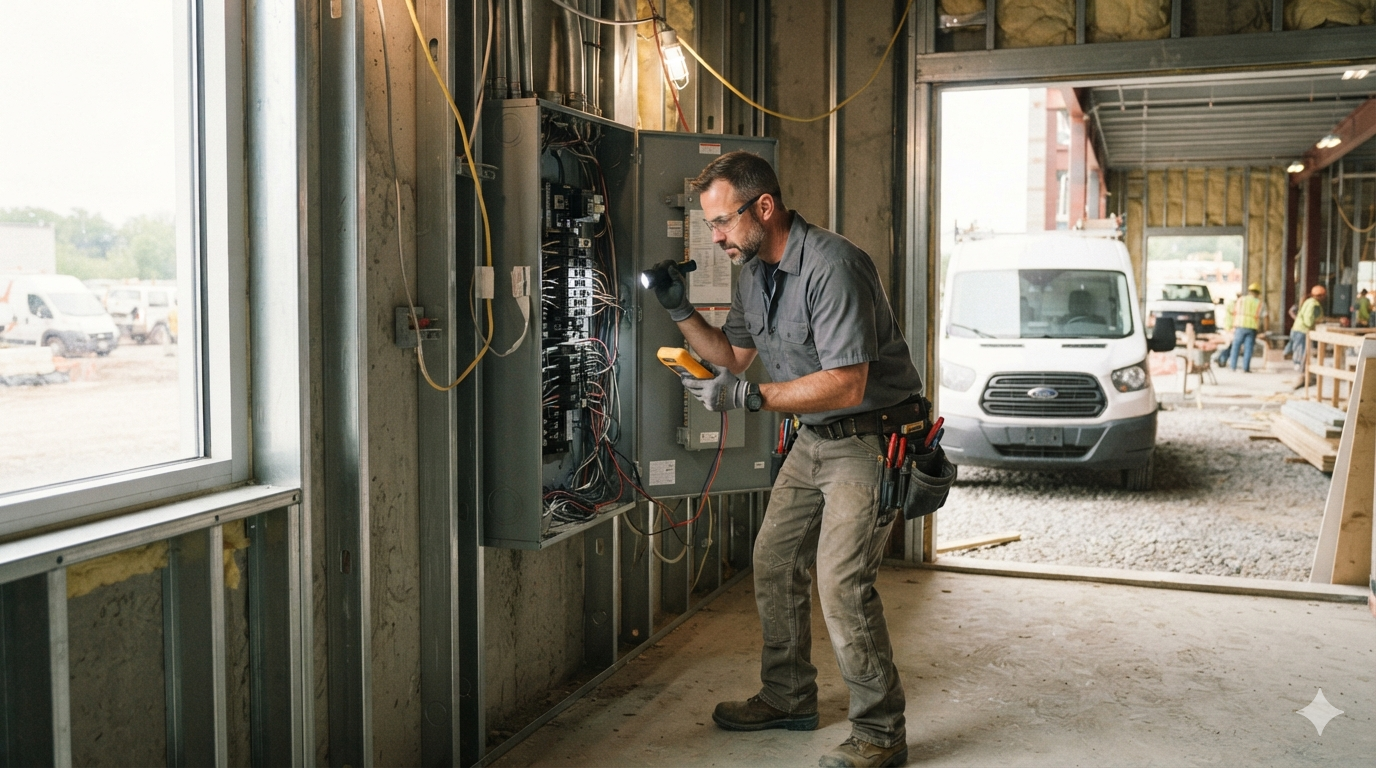
Electrocution is one of OSHA’s “Fatal Four” leading causes of construction worker deaths nationwide, alongside falls, struck-by, and caught-in/between hazards (source). For an electrical contractor, that risk shows up on your insurance in two places: a workers’ compensation policy priced for real injury exposure, and a commercial auto policy covering the service vans and trucks your crews live out of between jobs.
What Should Be in Your Commercial Auto Policy?
Owned vehicles: Service vans and trucks carrying tools, ladders, and testing equipment need auto liability plus a contractors’ equipment floater — one without the other leaves a gap.
Hired & non-owned auto (HNOA): If employees or subs ever drive a personal vehicle to a job site, or you rent a vehicle for a bigger project, HNOA coverage closes a gap most electricians don’t discover until a claim happens.
Higher liability limits: Many general contractors now require $1M/$2M auto liability limits before an electrical sub can even step onto a job site — more on that below.
What Drives Workers’ Comp Cost for Electricians in Illinois?
Illinois law requires nearly every employer with employees — including a one-person crew with a single helper — to carry workers’ compensation coverage (820 ILCS 305), regardless of full- or part-time status. For electricians specifically, your actual premium is driven by three things:
Payroll within your electrical work classification code
Your experience modification factor (e-mod) — your claims history moves this up or down every year
Safety practices — a recordable incident can raise your e-mod for up to three years
Rather than quote a single number that won’t hold true for every shop, the honest answer is: bring your payroll and loss history to an agent who can run it against current rates for your specific class code. If a quote sounds too good — or too generic — to be true, it usually is.
A $38,000 Wake-Up Call
One of our electrical contractor clients was three weeks into a Chicago Loop tenant build-out when a first-year apprentice fell from a ladder while running conduit, injuring his shoulder badly enough to require surgery. Because the contractor carried workers’ comp coverage matched to his actual payroll and class code, the claim covered roughly $38,000 in medical bills and lost wages — with no out-of-pocket exposure and no work stoppage. The general contractor’s subcontractor agreement also required $1M in commercial auto liability, which the client already carried, so there was no scramble to add coverage mid-project.
Certificates of Insurance: The Paperwork That Can Cost You the Job
Most general contractors won’t let an electrical sub onto a site without a certificate of insurance (COI) showing specific liability, auto, and workers’ comp limits — often naming the GC as an additional insured. A missing or outdated COI is one of the most common, and most avoidable, reasons subcontractors lose bids or get pulled off jobs mid-project. Keep your COI current, and ask your agent for same-day turnaround whenever a GC’s requirements change.
How Weer Insurance Group Helps Illinois Electrical Contractors
We work with 30+ carriers, so we can match a policy to your actual payroll, claims history, and fleet — and turn around certificates of insurance fast when a general contractor needs one. If you’re bidding new work this fall, get a quote or call us at 773-545-2001.
Sources: OSHA “Fatal Four” construction hazards (ConstructConnect); Illinois Workers’ Compensation Act, 820 ILCS 305. The client scenario above is a composite example used for illustration.
Condo Insurance for When a Century-Old Building Becomes a Condo
Chicago is full of converted historic buildings, old factories, warehouses, and apartment blocks turned into condominiums that carry decades of character. These conversions give owners a unique kind of home, but they also create insurance considerations that newer construction simply doesn’t face. Weer Insurance Group works with associations and historic buildings across Chicago that are often surprised by how differently these buildings need to be evaluated for condo insurance.
Replacement Cost Gets Complicated Fast
Rebuilding a converted historic structure to current code can cost significantly more than replacing a modern building of the same size. Original masonry, ornamental details, and non-standard layouts often require specialized labor and materials that are harder to source and more expensive to replicate. A master policy based on outdated replacement figures can leave an association seriously
under insured
after a major loss.
Code Compliance Adds Another Layer
Buildings converted decades ago were often grandfathered under older codes when they first became residential. If a significant loss requires substantial rebuilding, current building and fire codes typically apply to the reconstruction, even if the original structure never had to meet them. This can mean unexpected costs for updated electrical systems, fire suppression, or structural reinforcement that weren’t part of the original conversion.
Unique Architectural Features Carry Their Own Risk
Original wood beams, exposed brick, or cast iron elements may be difficult or impossible to match after damage
Older plumbing and electrical systems can increase the likelihood of certain types of claims
Irregular unit layouts from conversion can complicate how coverage is divided among owners
Why Regular Condo Insurance Reviews Matter More Here
Because construction costs and code requirements keep shifting, a converted building’s insurance needs can change more quickly than boards expect. Associations that assume their coverage from years ago still reflects reality often discover otherwise only after a claim. For more on how underinsurance tends to surface at renewal, take a look at our related piece on condo insurance mistakes Illinois boards make at renewal.
Historic conversions give Chicago condo buildings their character, but that character comes with insurance considerations that deserve regular attention. Weer Insurance Group helps associations throughout Chicago review their coverage against the realities of older, converted structures. To learn more, visit our condo associations page.
A pipe bursts inside a shared wall on the fourth floor. Water runs down through three units and into the hallway below. The association’s master policy pays for the repair. But the policy carries a $50,000 deductible, and someone has to cover that cost. Under Illinois law, that someone can be the unit owner whose unit the water came from. Most owners have no idea this is legal until an assessment notice shows up in the mail.
This is exactly the scenario loss assessment coverage is built for. It’s also one of the most misunderstood parts of Illinois condo insurance. Boards often assume the master policy handles everything. Owners often assume their monthly dues already cover it. Neither assumption holds up under 765 ILCS 605/12, and that gap is where associations and owners get hurt financially.
What Does the Illinois Condominium Property Act Require?
Section 12 of the Illinois Condominium Property Act sets the baseline for every condo master policy in the state. The statute requires property insurance on the common elements and the units themselves, including limited common elements. Coverage must be written at replacement cost, not actual cash value, and it must be enough to rebuild to current building code. That’s the foundation every Illinois association must carry.
But the statute doesn’t stop at what the policy covers. Subsection (c) addresses the deductible, and this is the part most owners never read:
The board of directors may, in the case of a claim for damage to a unit or the common elements: (i) pay the deductible as a common expense, (ii) after notice and an opportunity for a hearing, assess the deductible against the owner who caused the damage or from whose unit the damage originated, or (iii) require the affected unit owners to pay the deductible.
In plain terms, the board has three options. Two of those options put the deductible on one owner’s shoulders, not on the association’s shared budget. So a board isn’t required to spread a deductible across every owner through regular dues. Instead, it can legally send the bill to whoever’s unit the damage started in.
Illinois Courts Have Backed This Up
This isn’t just a theory about how the statute might work. In one Illinois appellate court case, a board assessed a deductible back to an owner after a fire that started in that owner’s unit. The owner pushed back on two grounds. First, he argued the association never adopted the statute’s language into its own governing documents. Second, he claimed the insurance payout may have covered the loss, so the deductible didn’t actually cost the association anything.
The court rejected both arguments. It held that 765 ILCS 605/12(c) gives the board this authority directly. The association doesn’t need to copy the statute into its bylaws word for word for it to apply. The court also found that an unreimbursed deductible is, by definition, a cost the policy didn’t cover. Because the board followed the required notice and hearing process, the assessment stood.
The lesson for boards and owners is the same either way: this authority is real, and it has already been tested in court.
Where the Master Policy Stops and Your Personal Coverage Starts
Illinois associations must insure the common elements and, generally, the units themselves. But under the statute, “the unit” usually means the bare walls, floors, and ceilings, not everything inside them. Flooring, cabinetry, owner-installed fixtures, personal belongings, and other interior improvements are excluded from the master policy’s baseline requirement, unless the board has separately chosen to cover them.
That’s exactly the gap a personal HO-6 condo policy is built to fill. A well-structured HO-6 policy covers:
Personal property and interior improvements not covered by the master policy
Personal liability if someone is injured inside the unit
Loss of use coverage if the unit becomes temporarily uninhabitable
Loss assessment coverage, which reimburses the owner if the association bills them for a deductible or special assessment tied to an insured loss
That last item is the one most owners skip or underinsure. Given what 605/12(c) allows a board to do, it’s also the item that matters most.
Why a $1,000 Loss Assessment Limit Isn’t Enough Anymore
Standard HO-6 policies often default to a modest loss assessment limit, sometimes as low as $1,000. That number made sense years ago, when master policy deductibles ran a few hundred dollars. But it no longer reflects where the Illinois market has moved.
Rising reinsurance costs, more frequent water and wind losses, and tighter underwriting have pushed many Illinois condo master policy deductibles up to $10,000, $25,000, or even $100,000 in some buildings, especially for wind and hail. If a board assesses that deductible to the unit where the damage started, and that owner’s loss assessment limit tops out at $1,000, the owner covers the rest personally.
Before renewing a personal policy, ask your board or property manager two questions: What is the master policy’s current deductible? And does the board typically charge deductibles back to at-fault owners, or spread them as a common expense? Both answers change how much loss assessment coverage actually makes sense for you.
What Boards Should Tell Owners Before a Claim Happens
Boards that handle this well don’t wait for a claim to explain how deductibles work. Instead, they put the policy in writing ahead of time, in the annual meeting notice, the new-owner welcome packet, or a short insurance FAQ posted with the budget. A board that documents its deductible-assessment policy early, and follows its own notice-and-hearing process consistently, stands in a much stronger position than one that improvises after a loss.
This also protects the board from a separate risk. An owner who feels blindsided by a five-figure assessment has a more sympathetic story to tell a judge or an attorney than one who was told clearly, years in advance, exactly how the association handles deductibles.
The Bottom Line for Illinois Condo Owners and Boards
765 ILCS 605/12 gives Illinois condo boards real flexibility in how they handle master policy deductibles. Courts have consistently upheld a board’s right to bill an at-fault owner directly. For owners, that means loss assessment coverage isn’t optional. It’s the piece of a personal condo policy that stands between a covered loss and a five-figure bill with your name on it. For boards, it means the deductible-assessment policy belongs in writing, communicated well before a claim, not explained for the first time in a hearing notice.
If you’re a board member reviewing your master policy’s deductible structure, or a unit owner unsure whether your HO-6 loss assessment limit is high enough, we can review both sides of the coverage together. That way, there’s no gap between what the association carries and what you’re personally protected for.
Have questions about your condo association’s insurance program or your own HO-6 policy?Contact Weer Insurance Group for a coverage review, or call us at 773-545-2001.
Liability Risks Are Common in Chicago Condo Living
Condo living in Chicago offers convenience and access to vibrant neighborhoods, but it also comes with shared spaces and close proximity to neighbors. These factors increase the chance of liability-related incidents that can extend beyond your own unit. Liability coverage within a condo insurance policy helps protect unit owners when they are held responsible for bodily injury or property damage involving others.
At Weer Insurance Group in Chicago, Illinois, conversations with condo owners often reveal misunderstandings about how much protection an association’s master policy actually provides. While the HOA policy covers common areas and certain building elements, it typically does not protect individual owners from personal liability claims.
Everyday Scenarios Where Liability Coverage Applies
Liability issues do not always stem from major accidents. Water damage from a leaking appliance, a guest slipping inside your unit, or damage caused during renovations can all trigger liability claims. In multi-unit Chicago buildings, even minor incidents can affect neighboring condos and lead to complex responsibility questions.
Personal liability coverage helps address legal defense costs and covered damages when a condo owner is found responsible. Without it, these expenses may need to be paid out of pocket.
Why Chicago Condo Owners Face Elevated Liability Exposure
Shared walls, plumbing, and electrical systems
Frequent guests, deliveries, and service providers
High-density living with limited separation between units
These factors make liability coverage a core component of a well-rounded condo insurance policy rather than an optional add-on.
How Liability Coverage Complements Other Condo Protections
Liability coverage works alongside personal property and interior coverage to form a complete insurance approach. While property coverage focuses on belongings and interior features, liability coverage focuses on protecting financial stability when claims involve other people.
Condo owners working with Weer Insurance Group in Chicago, Illinois benefit from guidance that reflects the realities of urban condo ownership. To learn more about condo insurance and liability protection, visit the Weer Insurance Group website or explore their condo insurance resources.
Many condo board members in Illinois think directors and officers (D&O) insurance is optional. They treat it as a nice extra to buy if the budget allows. That belief is risky, and it is also wrong. In Illinois, D&O coverage for a condo association is not optional. The law requires it.
The short answer: yes, the law requires it
So does every Illinois condo board really need D&O insurance? Yes. The Illinois Condominium Property Act spells out the insurance a condo association must carry, and you will find those rules in Section 12 of the Act (765 ILCS 605). Most boards already know two of the big ones. First, property insurance on the common elements. Second, at least $1,000,000 in general liability coverage. Fewer boards realize that the same section also requires the board to carry D&O coverage.
You will find the requirement in subsection 12(a)(3)(D). It directs the board to obtain D&O liability coverage at a level the board considers reasonable, unless the declaration or bylaws set a different level. In other words, the law places this duty directly on the board. It is not a suggestion, and a board cannot quietly skip it to save money at renewal.
Why does the exact citation matter? The D&O requirement sits at 765 ILCS 605/12(a)(3)(D), under the heading “Fidelity bond; directors and officers coverage.” You may have seen it cited as “Section 12(c)” somewhere. However, that citation is wrong. Subsection (c) actually covers insurance deductibles. So when you rely on the law as a board member, you need to point to the right subsection.
What D&O insurance actually protects
Condo board members are volunteers. They are unit owners who agreed to give their time to run the association. Day to day, they approve budgets, hire vendors, enforce rules, and make tough calls about repairs and reserves. Unfortunately, any one of those decisions can trigger a lawsuit. For example, an owner might challenge a special assessment. A vendor might sue over a contract. A resident might claim the board enforced a rule unfairly. In each case, the lawsuit can name the board and individual members directly.
This is where D&O insurance steps in. It pays the legal defense costs and any resulting settlement or judgment that flows from the board’s official decisions. Without it, a board member’s personal assets can be at risk for choices they made as an unpaid volunteer. With it, the policy defends the board and covers the claim.
D&O does not cover everything, though. It will not protect a board member who commits a crime, acts intentionally to harm someone, or makes a decision for personal financial gain. For example, a board member who steals association funds gets no protection from D&O. Instead, a different coverage handles that risk, and we will explain it below.
What the law requires your D&O policy to include
Illinois does not just require a policy to exist. It also spells out what that policy must do. Under 765 ILCS 605/12(a)(3)(D), the coverage must extend to every contract and action the board takes in its official role. On top of that, it must specifically cover three things:
Defense of non-monetary actions. These are lawsuits that ask for something other than money, such as a court order forcing the board to act or to stop acting.
Defense of breach of contract claims. These are disputes over agreements the board signed for the association.
Defense of decisions about the placement or adequacy of insurance. In other words, claims arguing the board bought the wrong coverage, or too little of it.
The law also names who the policy must protect. Specifically, the coverage must include these people:
Past, present, and future board members, while they act in their board role
The association’s managing agent
Employees of the board and of the managing agent
That phrase “past, present, and future” carries real weight. For example, a board member who left two years ago can still face a lawsuit over a decision from their term. Therefore, a strong Illinois policy follows that risk and does not leave former volunteers exposed.
The one big carve-out: the indemnification exclusion
The law also builds in one important limit. The required D&O coverage excludes any action where a director cannot receive indemnification under the Illinois General Not For Profit Corporation Act of 1986, or under the association’s own declaration and bylaws. Put simply, the coverage backs board members in the honest exercise of their duties. However, it does not erase the limits that already control when a board member can be indemnified at all.
For this reason, a board should review its declaration and bylaws alongside the policy. The governing documents and the insurance need to work together. Otherwise, a gap between them tends to surface at the worst possible moment, right after someone files a claim.
“Required” does not mean “adequate”
Here is the trap. The law requires D&O coverage, but it sets the limit at a level the board “considers reasonable,” unless the declaration or bylaws say otherwise. That freedom cuts both ways. Technically, a board can satisfy the law with a low limit. Then, after a serious claim, the board may find that defense costs alone wipe out the limit. As a result, the association and its members carry the rest of the cost themselves.
Illinois courts have long held that condo board members owe a fiduciary duty to the association and its owners. Courts have also treated a failure to secure adequate insurance as a possible breach of that duty. So a bare-minimum D&O policy does more than create financial risk. In fact, it can create the very liability the coverage should prevent. “We met the minimum” makes a weak defense.
So what is the right limit? You will not find that number in the law. Instead, it depends on the size of your association, the value of the property, the reserve balance, your claims history, and the real cost of defending a lawsuit in your county. Therefore, this is a conversation to have with an agent who knows condo associations, not a box to check at renewal.
D&O vs. the fidelity bond: two things boards confuse
Because D&O coverage and the fidelity bond sit in the same part of the Act, boards often mix them up. Yet they guard against very different risks:
D&O insurance covers decisions. It responds to lawsuits over how the board governs.
A fidelity bond covers dishonesty. It responds to theft, fraud, or embezzlement of association money. Under 765 ILCS 605/12(a)(3), an association with six or more units must carry a fidelity bond. That bond must cover anyone who handles association funds, including the managing agent and its staff, up to the full amount of the association’s funds and reserves.
In short, a board needs both. D&O will not replace a stolen reserve fund, and a fidelity bond will not defend a lawsuit over a special assessment. So an association that carries one and assumes it covers the other has a hidden gap.
Where Illinois condo boards get D&O wrong
Across our work with condo associations in Illinois, the same avoidable mistakes show up again and again:
Assuming the management company’s policy covers the board. A property manager’s own D&O policy protects the management company, not your volunteer board. Always confirm that the association’s own policy names the board.
Carrying a limit that has not moved in years. Property values, reserves, and legal costs keep climbing. Therefore, a limit set a decade ago may no longer count as “reasonable.”
Letting former board members fall out of coverage. Instead, the policy should cover past members for decisions made during their terms.
Treating D&O and the fidelity bond as the same thing. They cover different risks, and the law requires both.
Reading the policy only at renewal. The best time to understand your coverage is before a claim, not while you read a denial letter.
Not sure which of these applies to your association? Then that uncertainty is your signal to get the coverage reviewed. For a wider look at the renewal mistakes that cost Illinois boards money, read our companion guide, 5 Costly Condo Insurance Mistakes Illinois Boards Make at Renewal.
Frequently asked questions
Is D&O insurance legally required for condo associations in Illinois?
Yes. Under 765 ILCS 605/12(a)(3)(D) of the Illinois Condominium Property Act, the board must obtain D&O liability coverage. So it is a legal duty, not an optional extra.
How much D&O coverage does an Illinois condo board have to carry?
The law sets the limit at a level the board considers reasonable, unless the declaration or bylaws name an amount. As a result, there is no fixed dollar figure, and the board must choose an adequate limit itself. Because board members owe a fiduciary duty, an inadequate limit can create its own liability.
Does D&O insurance protect individual board members personally?
Yes. A compliant Illinois policy covers past, present, and future board members in their official role, plus the managing agent and employees. Therefore, it shields board members’ personal assets from claims over their decisions. However, it does not cover crimes, fraud, or decisions made for personal gain.
What is the difference between D&O insurance and a fidelity bond?
D&O insurance covers lawsuits over the board’s decisions. A fidelity bond covers theft, fraud, or embezzlement of association funds. Both appear in 765 ILCS 605/12, and a condo association generally needs both because they protect against different risks.
Are former condo board members still covered after they leave the board?
They should be. The law requires coverage to reach past board members for actions taken while serving. Because a claim can arrive long after a term ends, the policy needs to follow that risk.
Get your condo association’s D&O coverage reviewed
Weer Insurance Group works with condominium associations throughout Illinois. First, we review your current D&O and fidelity coverage against what 765 ILCS 605 requires. Then we flag any gaps. Finally, we make sure your board members are truly protected, not just technically compliant.
This article shares general information, not legal advice. The Illinois Condominium Property Act can change, and your association’s declaration and bylaws may add requirements. Before you act, talk with a licensed Illinois attorney and a licensed insurance professional about your association’s specific obligations.


 Click to Call
  Send us a Text
  Get Directions