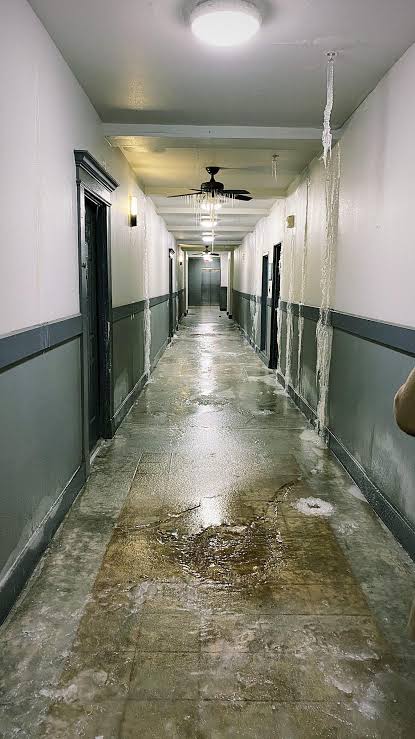
Chicago is full of converted buildings, old factories, warehouses, and apartment blocks turned into condominiums that carry decades of character. These conversions give owners a unique kind of home, but they also create insurance considerations that newer construction simply doesn’t face. Weer Insurance Group works with associations across Chicago who are often surprised by how differently these buildings need to be evaluated.
Replacement Cost Gets Complicated Fast
Rebuilding a converted historic structure to current code can cost significantly more than replacing a modern building of the same size. Original masonry, ornamental details, and non-standard layouts often require specialized labor and materials that are harder to source and more expensive to replicate. A master policy based on outdated replacement figures can leave an association seriously underinsured after a major loss.
Code Compliance Adds Another Layer
Buildings converted decades ago were often grandfathered under older codes when they first became residential. If a significant loss requires substantial rebuilding, current building and fire codes typically apply to the reconstruction, even if the original structure never had to meet them. This can mean unexpected costs for updated electrical systems, fire suppression, or structural reinforcement that weren’t part of the original conversion.
Unique Architectural Features Carry Their Own Risk
Original wood beams, exposed brick, or cast iron elements may be difficult or impossible to match after damage
Older plumbing and electrical systems can increase the likelihood of certain types of claims
Irregular unit layouts from conversion can complicate how coverage is divided among owners
Why Regular Policy Reviews Matter More Here
Because construction costs and code requirements keep shifting, a converted building’s insurance needs can change more quickly than boards expect. Associations that assume their coverage from years ago still reflects reality often discover otherwise only after a claim. For more on how underinsurance tends to surface at renewal, take a look at our related piece on condo insurance mistakes Illinois boards make at renewal.
Historic conversions give Chicago condo buildings their character, but that character comes with insurance considerations that deserve regular attention. Weer Insurance Group helps associations throughout Chicago review their coverage against the realities of older, converted structures. To learn more, visit our condo associations page.
A pipe bursts inside a shared wall on the fourth floor. Water runs down through three units and into the hallway below. The association’s master policy pays for the repair. But the policy carries a $50,000 deductible, and someone has to cover that cost. Under Illinois law, that someone can be the unit owner whose unit the water came from. Most owners have no idea this is legal until an assessment notice shows up in the mail.
This is exactly the scenario loss assessment coverage is built for. It’s also one of the most misunderstood parts of Illinois condo insurance. Boards often assume the master policy handles everything. Owners often assume their monthly dues already cover it. Neither assumption holds up under 765 ILCS 605/12, and that gap is where associations and owners get hurt financially.
What Does the Illinois Condominium Property Act Require?
Section 12 of the Illinois Condominium Property Act sets the baseline for every condo master policy in the state. The statute requires property insurance on the common elements and the units themselves, including limited common elements. Coverage must be written at replacement cost, not actual cash value, and it must be enough to rebuild to current building code. That’s the foundation every Illinois association must carry.
But the statute doesn’t stop at what the policy covers. Subsection (c) addresses the deductible, and this is the part most owners never read:
The board of directors may, in the case of a claim for damage to a unit or the common elements: (i) pay the deductible as a common expense, (ii) after notice and an opportunity for a hearing, assess the deductible against the owner who caused the damage or from whose unit the damage originated, or (iii) require the affected unit owners to pay the deductible.
In plain terms, the board has three options. Two of those options put the deductible on one owner’s shoulders, not on the association’s shared budget. So a board isn’t required to spread a deductible across every owner through regular dues. Instead, it can legally send the bill to whoever’s unit the damage started in.
Illinois Courts Have Backed This Up
This isn’t just a theory about how the statute might work. In one Illinois appellate court case, a board assessed a deductible back to an owner after a fire that started in that owner’s unit. The owner pushed back on two grounds. First, he argued the association never adopted the statute’s language into its own governing documents. Second, he claimed the insurance payout may have covered the loss, so the deductible didn’t actually cost the association anything.
The court rejected both arguments. It held that 765 ILCS 605/12(c) gives the board this authority directly. The association doesn’t need to copy the statute into its bylaws word for word for it to apply. The court also found that an unreimbursed deductible is, by definition, a cost the policy didn’t cover. Because the board followed the required notice and hearing process, the assessment stood.
The lesson for boards and owners is the same either way: this authority is real, and it has already been tested in court.
Where the Master Policy Stops and Your Personal Coverage Starts
Illinois associations must insure the common elements and, generally, the units themselves. But under the statute, “the unit” usually means the bare walls, floors, and ceilings, not everything inside them. Flooring, cabinetry, owner-installed fixtures, personal belongings, and other interior improvements are excluded from the master policy’s baseline requirement, unless the board has separately chosen to cover them.
That’s exactly the gap a personal HO-6 condo policy is built to fill. A well-structured HO-6 policy covers:
Personal property and interior improvements not covered by the master policy
Personal liability if someone is injured inside the unit
Loss of use coverage if the unit becomes temporarily uninhabitable
Loss assessment coverage, which reimburses the owner if the association bills them for a deductible or special assessment tied to an insured loss
That last item is the one most owners skip or underinsure. Given what 605/12(c) allows a board to do, it’s also the item that matters most.
Why a $1,000 Loss Assessment Limit Isn’t Enough Anymore
Standard HO-6 policies often default to a modest loss assessment limit, sometimes as low as $1,000. That number made sense years ago, when master policy deductibles ran a few hundred dollars. But it no longer reflects where the Illinois market has moved.
Rising reinsurance costs, more frequent water and wind losses, and tighter underwriting have pushed many Illinois condo master policy deductibles up to $10,000, $25,000, or even $100,000 in some buildings, especially for wind and hail. If a board assesses that deductible to the unit where the damage started, and that owner’s loss assessment limit tops out at $1,000, the owner covers the rest personally.
Before renewing a personal policy, ask your board or property manager two questions: What is the master policy’s current deductible? And does the board typically charge deductibles back to at-fault owners, or spread them as a common expense? Both answers change how much loss assessment coverage actually makes sense for you.
What Boards Should Tell Owners Before a Claim Happens
Boards that handle this well don’t wait for a claim to explain how deductibles work. Instead, they put the policy in writing ahead of time, in the annual meeting notice, the new-owner welcome packet, or a short insurance FAQ posted with the budget. A board that documents its deductible-assessment policy early, and follows its own notice-and-hearing process consistently, stands in a much stronger position than one that improvises after a loss.
This also protects the board from a separate risk. An owner who feels blindsided by a five-figure assessment has a more sympathetic story to tell a judge or an attorney than one who was told clearly, years in advance, exactly how the association handles deductibles.
The Bottom Line for Illinois Condo Owners and Boards
765 ILCS 605/12 gives Illinois condo boards real flexibility in how they handle master policy deductibles. Courts have consistently upheld a board’s right to bill an at-fault owner directly. For owners, that means loss assessment coverage isn’t optional. It’s the piece of a personal condo policy that stands between a covered loss and a five-figure bill with your name on it. For boards, it means the deductible-assessment policy belongs in writing, communicated well before a claim, not explained for the first time in a hearing notice.
If you’re a board member reviewing your master policy’s deductible structure, or a unit owner unsure whether your HO-6 loss assessment limit is high enough, we can review both sides of the coverage together. That way, there’s no gap between what the association carries and what you’re personally protected for.
Have questions about your condo association’s insurance program or your own HO-6 policy?Contact Weer Insurance Group for a coverage review, or call us at 773-545-2001.


 Click to Call
  Send us a Text
  Get Directions