
Restaurant Group Insurance: One Program for Every Location

Restaurant group insurance is the coverage plan that protects every location you own under one roof. When it is built well, each site has the right limits and every policy renews on the same day. When it grows one store at a time, gaps creep in. As a result, a single claim can hurt the whole group.

This guide is for owners of multi-location restaurant groups in Illinois, Wisconsin and Indiana. If you run three to fifteen units, you likely have several leases, liquor licenses and payrolls. So here is how strong groups set up their programs. We also show where the gaps usually hide.
Restaurant group insurance for a multi-location Illinois restaurant owner

Why Restaurant Group Insurance Gets Messy

Most groups don’t plan their insurance. Instead, it piles up. The first store gets a package policy. Then the second store gets its own policy, often from a different agent. Later, a third site opens with a rushed quote to meet a lease deadline.

Soon you have five renewal dates, three carriers and limits that don’t match. In addition, each policy may define “location” or “premises” a little differently. That makes claims harder and certificates slower.

Underwriters notice this too. A scattered program looks harder to manage. On the other hand, a clean schedule of locations with matched limits shows control. Therefore, more carriers may compete for your account.

The Core of Restaurant Group Insurance: One Package

Most groups do best with one package policy that lists every location. A typical package combines general liability, property and business income. Many carriers also write liquor, umbrella and workers’ comp on the same account.

One package has clear benefits:

  • One renewal date for the whole group
  • One set of limits that you can match to your strictest lease
  • One claims team that already knows your business
  • Blanket property limits that can float between sites
  • Simpler certificates for landlords, lenders and event clients

Still, one package is not always possible. A high-liquor location may need a specialty market. In that case, keep the rest of the group together and match limits on the odd one out.

Per-Location Limits Protect the Whole Group

Here is a gap many owners miss. A general liability policy has a yearly aggregate limit. That is the most it will pay for all claims in a policy year. Without an endorsement, every location shares that one aggregate.

So a bad year at one store can drain coverage for the rest. A per-location aggregate endorsement fixes this. It gives each listed site its own aggregate limit. The standard form is the CG 25 04. (Insureon)

Also, many landlords now ask for it in the lease. Therefore, check that every location is on the schedule. A new store left off the list may not get its own limit.

Liquor Liability Across Every License

If your group serves alcohol, liquor liability is often your largest exposure. Under the Illinois Dram Shop Act, a business that serves someone who later causes harm can be sued. (235 ILCS 5/6-21)

Illinois caps those damages. For claims settled on or after January 20, 2026, the cap is $90,411.55 per person for injury or property damage. The cap for loss of support or society is $110,503. (Illinois Comptroller) However, those caps apply to each injured person. In other words, one crash can mean several claims.

Each license also has its own rules. For example, Chicago requires at least $300,000 per occurrence in liquor liability. The Local Liquor Control Commissioner must be the certificate holder, with 30 days’ notice of cancellation. (City of Chicago) Suburbs set their own minimums. So list every license and its rule in one place.

Finally, check two things. First, is liquor on your umbrella’s schedule of underlying policies? Second, is assault and battery covered, or cut to a small sublimit? For more, see our guide to Illinois liquor liability.

Property, Spoilage and Business Income

A kitchen fire, a burst pipe or a power outage can close a store for weeks. Meanwhile, rent, payroll and loan payments keep coming. That is why property and business income are core parts of restaurant group insurance.

Strong programs often include:

  • Blanket property limits across locations, so one site can draw on more if needed
  • Equipment breakdown for walk-ins, hoods, fryers and HVAC
  • Food spoilage after a power outage or cooler failure
  • Business income with enough months to reopen and rebuild sales
  • Utility service interruption, since many outages start off your premises

Next, review your business income worksheet each year. Sales grow when you add units. However, many groups never update the limit. As a result, they may be underinsured when a claim hits. Learn more on our commercial property insurance page.

Workers’ Comp for a Growing Team

Restaurant groups run on people. Cuts, burns and slips are common kitchen injuries. So workers’ comp is often one of the biggest premiums in restaurant group insurance.

In Illinois, even one part-time employee means you must carry it. Employers who knowingly skip coverage face fines of up to $500 a day, with a $10,000 minimum. The state can also order you to stop work. (Illinois Workers’ Compensation Commission)

Also, keep payroll split by location and job type. Front-of-house, kitchen and office staff often rate differently. Clean records make your year-end audit faster and fairer. For more, see our workers’ compensation page.

Employment and Privacy Risks for Restaurant Groups

As headcount grows, so do employee claims. Wage, harassment and wrongful firing claims are common in hospitality. Therefore, many groups add employment practices liability, often called EPLI, to their restaurant group insurance.

Illinois adds one more risk. The Biometric Information Privacy Act covers fingerprint time clocks. In 2023, the Illinois Supreme Court ruled that each scan could count as a separate violation. In August 2024, the law was amended. Now repeat scans of the same person by the same method count as one violation. (Duane Morris)

Still, damages can reach $1,000 or $5,000 per person. So if you use finger scans, get written consent from every worker. Also, ask whether your EPLI or cyber policy covers biometric claims. Many policies exclude them.

Auto Risk From Catering and Delivery

Many groups now cater or deliver. Often, staff drive their own cars. If a driver causes a crash on a work run, the injured person may sue your business too.

Hired and non-owned auto coverage helps here. It covers your business when staff use rented or personal vehicles for work. Also, if you own a catering van, it needs a commercial auto policy. See our commercial auto insurance page for details.

How to Prepare for Your Restaurant Group Insurance Renewal

Carriers that want restaurant groups look closely at how you run each store. So start 60 to 90 days before renewal. Then gather:

  1. A list of every location, with square footage and seats
  2. Food and alcohol sales by location
  3. Hours, live music and any late-night service
  4. Payroll by location and job type
  5. Every lease’s insurance section
  6. Every liquor license and its minimum limit
  7. Five years of loss runs on every line
  8. Your BASSET training records

As a result, carriers can quote faster and with fewer guesses. A complete file often means better terms. For neighborhood examples, see our Wicker Park bar insurance page.

Restaurant Group Insurance FAQ

Should every location be on one policy?

Often, yes. One package can mean one renewal and matched limits. However, a high-liquor site may need its own policy. In that case, line up its dates and limits with the rest.

What is a per-location aggregate?

It is an endorsement that gives each listed location its own yearly limit. So a big claim at one store doesn’t use up coverage for the others.

How much umbrella should a restaurant group carry?

It depends on your leases, licenses and sales. Many groups carry several million dollars. Also, make sure the umbrella sits over your liquor policy.

Does general liability cover a drunk-driving claim?

Usually not, if you sell or serve alcohol. Most general liability forms exclude liquor. Instead, you need liquor liability coverage.

When should we start our renewal?

Start 60 to 90 days out. That gives carriers time to review your locations and loss runs.

Get a Restaurant Group Insurance Review

If your group has added locations, your program should keep up. We can review your package, liquor, umbrella and workers’ comp in one meeting. Then we will show you where the gaps are. Request a commercial quote or call Weer Insurance Group at 773-545-2001. You can also learn more on our bars and restaurants insurance page.
Read More

Illinois Liquor Liability: What Bar Owners Must Carry

Illinois liquor liability is one of the biggest risks a bar or restaurant group faces. One over-served guest can lead to a car crash, a fight or a lawsuit. Under the Illinois Dram Shop Act, your business can pay for harm that guest causes. As a result, the right coverage matters as much as your liquor license.

This guide is for owners of taverns, sports bars and multi-location restaurant groups. We insure hospitality businesses across Illinois, Wisconsin and Indiana. Here is what the law says, what you need to carry and where coverage often falls short.

Illinois liquor liability insurance for a Chicago bar and restaurant group

How the Illinois Dram Shop Act Works

The Dram Shop Act is part of the state’s Liquor Control Act. It lets an injured person sue a licensed business whose alcohol sales helped make someone drunk. (235 ILCS 5/6-21)

In other words, a guest drinks at your bar, drives away and hits someone. The injured driver can then bring a claim against your business. Also, the law reaches further than many owners expect. For example, a landlord who knowingly lets alcohol be sold on the property can share the blame.

Still, the law has limits. The drunk guest cannot sue you under the Act for their own injuries. In addition, a claim must be filed within one year.

2026 Illinois Liquor Liability Limits

Illinois caps dram shop damages. The caps change each year with inflation, and the State Comptroller sets them every January 20. For judgments or settlements on or after January 20, 2026, the limits are:

  • $90,411.55 per person for injury to a person or property
  • $110,503.00 for loss of means of support or loss of society

(Source: Illinois Comptroller)

These caps may sound low. However, they apply to each injured person, not each incident. So one crash with four injured people can mean four claims. On top of that, defense costs add up, and lawsuits can take years.

Why the Caps Don’t Cap Your Risk

Many owners hear “about $90,000” and assume their risk ends there. Unfortunately, that is rarely true.

First, lawyers often add other claims to a dram shop suit. A fight may bring a negligent security claim. A fall may bring a premises claim. These claims may not fall under the dram shop caps.

Second, the caps can stack. A busy night can involve several injured people, each with their own limit.

Third, the market is tight. IA Magazine reports rising liquor liability rates and shrinking capacity in 2026. As a result, carriers are pickier about the bars they write.

What Chicago and Other Towns Require

Your local liquor license often sets the floor for your Illinois liquor liability coverage. For example, Chicago asks for a liquor liability or dram shop certificate with each license application. The policy must carry at least $300,000 per occurrence and last the full license period. Also, the Local Liquor Control Commissioner must be the certificate holder, with 30 days’ notice before cancellation. (City of Chicago)

Suburbs and counties set their own rules. So check each town where you hold a license. Meanwhile, landlords and lenders often ask for more. Many leases call for $1 million or more, and some add an umbrella on top.

General Liability Usually Excludes Liquor

Here is a gap we see often. Many owners assume their general liability policy covers alcohol claims. Usually, it does not.

Most standard general liability forms exclude liquor liability for businesses that sell or serve alcohol. Therefore, a bar or restaurant needs a separate liquor liability policy or endorsement. Without it, a dram shop claim may have no coverage at all. For the basics, see our page on general liability insurance.

What a Strong Bar and Restaurant Program Includes

For a growing hospitality group, Illinois liquor liability is only one piece. A complete program often includes:

  • Liquor liability with limits that meet license and lease rules
  • General liability for slips, falls and other premises claims
  • Assault and battery coverage, since many policies exclude or limit fights
  • Umbrella or excess liability that sits over your liquor policy
  • Commercial property, with equipment breakdown and spoilage
  • Business income in case a fire or outage closes you down
  • Workers’ compensation for kitchen and bar staff

Next, check that your umbrella actually covers liquor. Some umbrellas exclude it. Others only follow it if liquor is listed on the schedule of underlying policies. So read the umbrella form, not just the summary page. Learn more on our bars and restaurants insurance page.
Assault and Battery: The Exclusion That Sinks Claims

Fights are one of the most common bar claims. Yet many liquor and general liability policies exclude assault and battery. Others limit it to a small sublimit, well below the main policy limit.

So ask three questions at renewal:

  1. Does the policy cover assault and battery at all?
  2. Is there a sublimit, and how much is it?
  3. Does it cover claims tied to my door staff or security?

If the answers are unclear, get them in writing before you bind.

How Underwriters Price Illinois Liquor Liability

Carriers that want hospitality accounts look closely at how you run your business. In practice, they often ask about:

  • Your mix of food and alcohol sales
  • Your hours, especially late-night closing times
  • Live music, dancing, DJs or cover charges
  • Security staff, cameras and incident logs
  • Server training and ID checks
  • Five years of loss runs

Training matters here too. Illinois requires on-premise servers, and staff who check IDs, to complete BASSET training within 120 days of hire. The card is good for three years. Therefore, keep a current list of every employee’s card. A clean training file helps at renewal and in court.

Steps to Lower Your Dram Shop Risk

Insurance is your backstop. However, your floor staff is your first line of defense. Strong operators tend to share these habits:

  1. Train every server and door person, and track renewal dates
  2. Check IDs every time
  3. Cut off visibly drunk guests, and log it
  4. Offer food and alcohol-free drinks late at night
  5. Keep cameras running, and save footage after any incident
  6. Write up every incident the same night

As a result, you lower the odds of a claim. You also build the records your defense attorney will need. If you own several Chicago locations, our Wicker Park bar insurance page shows how we set up programs by neighborhood.

Illinois Liquor Liability FAQ

Is liquor liability insurance required in Illinois?

In practice, most bars need it to get or renew a license. Local liquor commissions often require proof of coverage. For example, Chicago requires at least $300,000 per occurrence. Landlords usually require it too.

What are the Illinois dram shop limits for 2026?

As of January 20, 2026, the cap is $90,411.55 per person for injury or property damage. The cap for loss of support or society is $110,503. They change every January 20.

Does my general liability policy cover a drunk-driving claim?

Usually not, if you sell or serve alcohol. Most general liability forms exclude liquor liability for these businesses. Instead, you need a separate liquor liability policy.

How much liquor liability should a restaurant group carry?

It depends on your licenses, leases and locations. Many groups carry $1 million per occurrence with an umbrella above it. So start with your strictest lease or license rule.

Do Wisconsin and Indiana follow the same rules?

No. Each state has its own alcohol liability laws. Therefore, a group with locations across state lines needs coverage built for each state.

Get an Illinois Liquor Liability Review

If your group has added locations, your coverage should keep up. We can review your liquor, umbrella and assault and battery wording in one meeting. Then we will show you where the gaps are. Request a commercial quote or call Weer Insurance Group at 773-545-2001.

Read More

Wholesale Distributor Insurance: What Amazon’s New Rules Mean for You

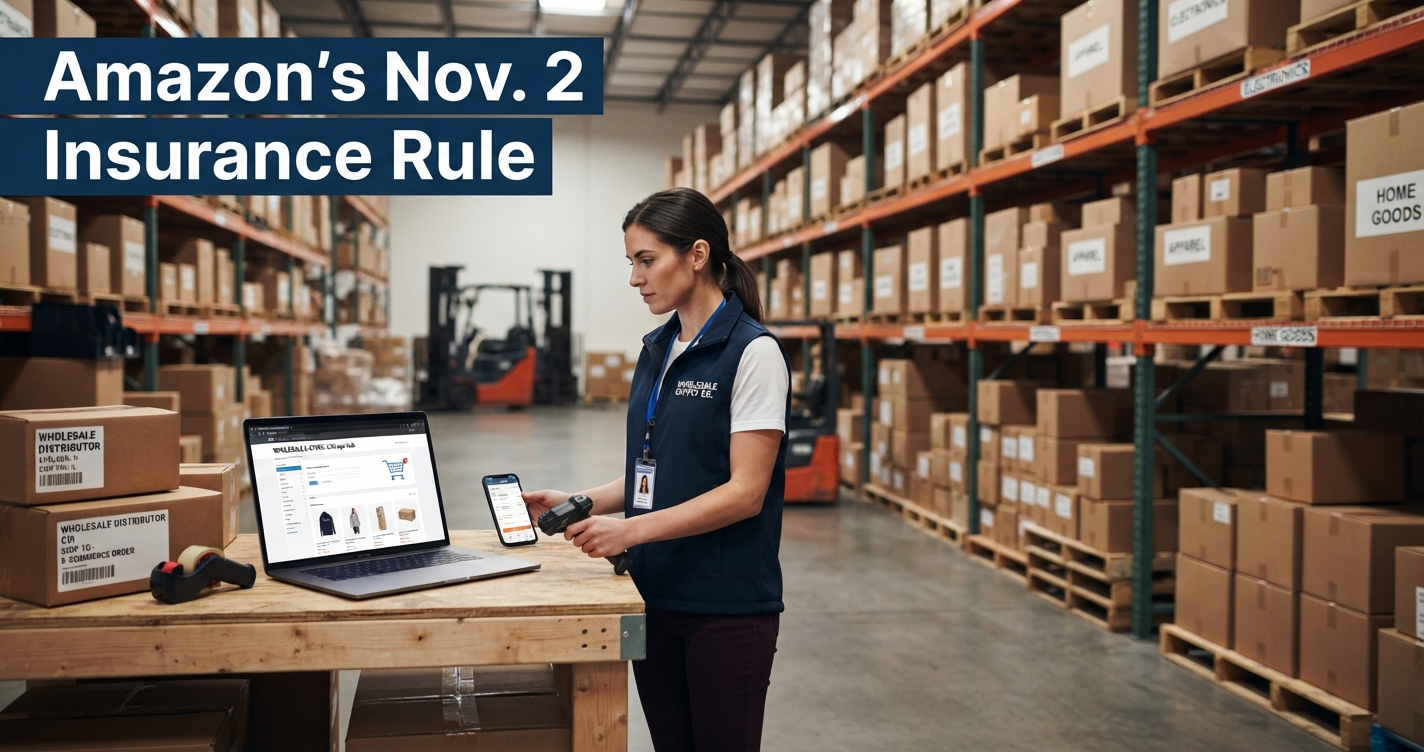
Wholesale distributor insurance just got more urgent. On November 2, 2026, Amazon changes its liability insurance rules for sellers. As a result, many distributors who sell online will need a $1 million policy, even with low sales. At the same time, landlords and retail buyers are asking for more proof of coverage than ever.

At Weer Insurance Group, we see this every week. In fact, two wholesale accounts came to us this month alone. Both had the same problem. They sold products they did not make, yet they carried the risk anyway. So here is what every distributor, importer, and e-commerce wholesaler should know.

What Is Wholesale Distributor Insurance?

Wholesale distributor insurance is not one policy. Instead, it is a package built around how you buy, store, and sell products. Most programs include:

  • General liability with products-completed operations coverage
  • Commercial property for your inventory and equipment
  • Hired and non-owned auto for staff who drive for errands
  • Umbrella or excess liability to raise your limits
  • Product recall for food, candy, and cosmetics
  • Workers’ compensation for warehouse staff
  • Inland marine or cargo for goods in transit

In other words, the right mix depends on what you sell and where it goes. For a closer look at the core policy, see our page on general liability insurance.

Amazon’s November 2, 2026 Insurance Rule

First, the big change. Until now, Amazon required liability coverage only after a seller passed $10,000 in gross proceeds in one month. However, starting November 2, 2026, that threshold goes away for 11 “enhanced safety” categories. These include cosmetics, consumable and ingestible products, children’s products, and lithium battery products, among others.

That means a candy, beauty, or supplement distributor may need coverage no matter how much it sells. Furthermore, the rule applies to existing listings, not just new ones. (My Amazon Guy and EcomCrew have good summaries of the change.)

What Amazon Requires in Your Policy

According to Amazon’s published terms, your policy must have:

  • Commercial general, excess, or umbrella liability coverage
  • $1 million per occurrence and $1 million in total
  • A deductible of $10,000 or less
  • An occurrence-based form that covers every product you list
  • “Amazon.com Services LLC and its affiliates and assignees” as an additional insured
  • A named insured that matches the legal name on your seller account
  • A carrier with worldwide claims handling

Reports say Amazon will give affected sellers 45 days to upload proof. Otherwise, listings in those categories can be turned off. So if you sell in these categories, start now. Underwriting takes time.

Why Distributors Get Sued for Products They Didn’t Make

Many owners assume the maker carries the risk, so they skip wholesale distributor insurance. Unfortunately, that is not how product liability works. When a customer is hurt, every company in the chain can be named in a lawsuit. That includes the maker, the importer, the wholesaler, and the store.

This risk grows when you import. For example, if the factory is overseas, a plaintiff may have no practical way to sue it. As a result, the U.S. importer or distributor often becomes the main target. Markel calls this one of the biggest pitfalls distributors face.

Ask Your Suppliers for a Vendor’s Endorsement

A vendor’s endorsement adds your company to the maker’s product liability policy. Consequently, their insurer may defend you first. Still, it does not replace your own coverage. Endorsements can be narrow, and overseas policies may not respond in U.S. courts.

Occurrence vs. Claims-Made: The Trap Most Buyers Miss

Next, check the policy form. Some carriers offer distributors a claims-made policy, often with high limits at a tempting price. However, product claims can show up years after the sale.

Here is why that matters. A claims-made policy usually starts at a “retroactive date.” If you never had insurance before, that date is the first day of the policy. Therefore, nothing you sold before that day would be covered. On the other hand, an occurrence policy works differently. It covers any injury that happens while the policy is active, even if the claim comes years later.

We saw this firsthand this month. A long-running Chicago distributor with no prior coverage was offered a claims-made option. On paper, it looked fine. In reality, it would have left years of past sales uncovered. So we pushed for an occurrence program instead.

In addition, Amazon and most landlords require occurrence form. Simply put, a cheaper claims-made quote may not even meet your contract.

Wholesale Distributor Insurance for Your Warehouse

Your inventory is often your largest asset. Yet many distributors are underinsured on commercial property. Underwriters will ask about:

  • Building construction and sprinklers (wet, dry, or ESFR)
  • Central-station alarms and cameras
  • Flammable goods, such as alcohol-based perfume, aerosols, or lithium batteries
  • How those goods are stored, and how much you keep on hand
  • Your highest inventory value, including the holiday peak

For instance, inventory that runs $750,000 most of the year may climb to $1 million in the fourth quarter. In that case, a peak-season endorsement can raise your limit for those months. Meanwhile, business income coverage protects your cash flow if a fire or water loss shuts you down.

Lease and Retailer Requirements for Wholesale Distributor Insurance

Often, the first push for coverage comes from a lease or a vendor agreement. Typical requirements include:

  • $1 million / $2 million general liability, with a products-completed operations aggregate
  • Additional insured status for ongoing and completed operations
  • Primary and non-contributory wording
  • Waiver of subrogation on general liability, auto, and workers’ comp
  • An umbrella that follows form over liability, auto, and employers liability
  • Carriers rated “A” or better by AM Best
  • 30 days’ notice of cancellation

Before you sign, send us the insurance section of your lease. That way, we can match the policy to the contract the first time.

Product Recall Coverage for Food, Candy, and Cosmetics

Product liability pays when someone is hurt. By contrast, product recall insurance pays to pull product off the shelves. That can include notices, shipping, disposal, and lost profit. Most general liability policies exclude recall costs.

For food, candy, and cosmetics companies, adding recall to your wholesale distributor insurance is worth pricing. Also, a written recall plan and lot-level tracking can improve your terms.

What Underwriters Will Ask You: A Checklist

To get the best price, have these ready:

  1. Annual revenue, split between wholesale and online sales
  2. A product list by category, with the share of sales for each
  3. The share of goods that are imported, and whether you are the importer of record
  4. Any private-label or repackaged products
  5. Warehouse details: square feet, construction, sprinklers, and alarms
  6. Your normal and peak inventory values
  7. How you store any flammable or hazardous items
  8. Prior insurance and loss history, or a short note on why you had none
  9. The insurance section of your lease and key customer contracts
  10. Your recall plan and lot tracking, if you have them

Above all, answer accurately. A wrong “yes” on an application can cost you coverage after a claim.

What Does Wholesale Distributor Insurance Cost?

Cost depends on what you sell, your revenue, and where it goes. For example, a small distributor of low-risk goods may pay a few thousand dollars a year. However, a large importer of cosmetics, perfume, or food is a different story. Once you add an umbrella and recall, the total can run well into five figures or more. That is why the structure matters as much as the price.

Why Work With an Independent Agency

Distributor risks rarely fit a standard business owner’s policy. As an independent agency, we can shop many carriers at once. That includes standard, surplus lines, and recall markets. As a result, you get one coordinated program instead of a patchwork. We work with wholesalers, importers, and online sellers across Illinois, Wisconsin, and Indiana.

Frequently Asked Questions

Do I need insurance to sell on Amazon?

It depends on your category and sales. Starting November 2, 2026, sellers in 11 enhanced safety categories need a $1 million occurrence policy, regardless of sales. For other categories, coverage is still required after $10,000 in monthly gross proceeds.

Does my manufacturer’s insurance cover me as a distributor?

Only if you are added through a vendor’s endorsement, and even then coverage can be limited. Therefore, you should carry your own product liability coverage.

Is product liability part of general liability?

Usually, yes. Most general liability policies include products-completed operations coverage. However, some policies limit or exclude certain products, so check the details.

Does general liability cover a product recall?

No. Recall costs are typically excluded. Instead, you need a separate product recall policy.

What limits do distributors usually need?

Most start with $1 million / $2 million in general liability. Then, many add a $2 million to $5 million umbrella to meet lease, retailer, or lender requirements.

Get a Wholesale Distributor Insurance Quote

Whether Amazon’s deadline is close or a landlord just asked for a certificate, we can help you move fast. Request a commercial quote or call Weer Insurance Group at 773-545-2001. You can also read our guide on whether delivery drivers need commercial insurance.

Read More

Do Delivery Drivers Need Commercial Auto Insurance?

Food delivery is one of the most popular side hustles in Chicago. But here’s the catch: your personal auto policy probably won’t cover you while you deliver. So if you crash with a DoorDash bag in your car, your insurer can deny the claim. As a result, you could be stuck paying for car damage, medical bills, and even lawsuits.

The right coverage depends on a few things. What do you deliver? How often do you drive? And which platform do you work for? Here’s how the coverage really works, and where the gaps are.

Why Your Personal Auto Policy Won’t Cover Deliveries

Almost every personal auto policy in Illinois has a “business use” exclusion. In plain English, your coverage can stop the moment you use your car to earn money. That even includes the drive to the restaurant to pick up an order.

Why do insurers care? Because delivery driving is riskier. You spend more time on the road. You make more stops. Plus, you often drive under time pressure. So if an adjuster learns the crash happened during a delivery, they will likely deny the claim. The Insurance Information Institute has a clear guide on how these gaps work for app-based drivers.

And the cost of a denied claim is real. You could pay for the other driver’s car and injuries out of pocket. You might also pay for your own repairs. On top of that, your insurer may drop you afterward.

What DoorDash, Uber Eats, and Grubhub Actually Cover

Most delivery apps advertise insurance for their drivers. However, the coverage is thinner than most drivers think. For example, DoorDash’s coverage generally applies only during an active delivery. It also acts as “excess” coverage in most cases. That means it only pays after your own policy responds — or denies the claim.

In short, there are three coverage periods to know:

  1. App on, waiting for an order — usually little or no app coverage
  2. Order accepted, driving to pick up — partial app coverage at best
  3. Food in your car, headed to the customer — the app’s strongest coverage window

See the problem? Your personal policy excludes business use in all three periods. Meanwhile, the app only steps in during the last one. Even then, it often won’t pay for damage to your own car. Every app’s terms are different, so read them closely. Better yet, let an agent read them with you. Our commercial auto insurance team reviews these terms for Chicago drivers all the time.

Independent Contractors: You’re On Your Own for Coverage

Maybe you don’t drive for the big food apps. Instead, you deliver equipment, retail goods, medical supplies, or auto parts as an independent contractor. In that case, there is no app policy behind you at all. The coverage is fully your job.

So be upfront with your agent about how you use your car. What do you haul? How many work miles do you drive? Do you travel between stores or job sites? These details decide what you need. It might be a simple business-use add-on to your personal policy. Or it might be a true commercial auto policy. Guess wrong either way and it costs you. One way leaves you exposed. The other way, you overpay for coverage you don’t need.

Also, many clients require proof of commercial coverage before you can start work. They ask for a certificate of insurance. If you’re building your own delivery business, talk this through before you sign a contract. Our business insurance team can show you what those contracts usually require.

Pizza Delivery Drivers Face the Strictest Rules

Insurers treat pizza delivery as one of the riskiest jobs in personal auto. Why? Fast delivery windows, frequent trips, night driving, and busy city streets. Most pizza shops don’t provide cars or insurance either. In fact, many insurers simply exclude pizza delivery from personal policies altogether.

So if you deliver pizza in Chicago, don’t assume you’re covered. And don’t assume your employer has you protected. Ask your insurer directly — in writing if you can. The Illinois Department of Insurance also publishes a consumer guide on required auto coverage in the state. Keep in mind, those state minimums can run out fast in a serious delivery crash.

How to Close the Gap: Your Options in Illinois

The good news? The fix is usually one of three things:

  • Rideshare or delivery endorsement. This add-on covers the “app on” gap. It’s the cheapest option for part-time drivers. However, not every carrier offers it for food delivery.
  • Commercial auto policy. This is full business coverage for your vehicle. Most full-time drivers and contractors need this one.
  • Hybrid gig-driver policies. Some carriers now blend personal and business coverage in one policy.

The right choice depends on your platform, your hours, and your vehicle. But the wrong choice is doing nothing and hoping no one checks.

Talk to a Chicago Agency That Knows Delivery Risk

At Weer Insurance Group, we help delivery drivers, couriers, and contractors across Chicago every week. Because we’re independent, we can shop carriers that actually want delivery business. Many captive agents can’t quote these at all. We’ll review your current policy and read your app’s coverage terms. Then we’ll tell you honestly what you need — an endorsement or a commercial policy. We serve Chicago, the suburbs, and all of Illinois, Wisconsin, and Indiana. Plus, we speak English, Spanish, Polish, Ukrainian, and Russian.

Contact us today for a free coverage review. Do it before your next shift — not after your first denied claim.


Frequently Asked Questions

Does DoorDash provide insurance for its drivers? Yes, but it’s limited. The coverage mainly applies during active deliveries. Also, it usually pays only after your own policy responds first. And it typically won’t cover damage to your own car.

Will my insurance company find out I do deliveries? Often, yes. Adjusters investigate how a crash happened. So if you were delivering, they can deny the claim. They may also drop your policy afterward.

How much does commercial auto insurance cost for delivery drivers in Chicago? It depends on your car, your record, and your delivery type. A delivery endorsement can cost a few hundred dollars a year. A full commercial policy costs more. Still, both cost far less than one uncovered crash.

Do I need commercial insurance if I only deliver part-time? Maybe not a full policy. But you likely need at least a delivery endorsement. Even one delivery a week can trigger the business-use exclusion.

Read More