
 Click to Call
 Send us a Text
 Get Directions
Construction Workers Compensation: Year-End FAQ for Contractors
Construction workers compensation is often the largest premium on a contractor’s account. It is also the line most likely to surprise you after the policy ends. With year-end audits and January 1 renewals coming up, now is a good time to check it.
This FAQ is for owners of growing contractors with several crews. We answer the questions we hear most about mods, audits and class codes.
Who Needs Construction Workers Compensation in Illinois?
Nearly every employer does. In Illinois, even one part-time employee triggers the rule. Also, coverage must start on day one. (Illinois Workers’ Compensation Commission)
Construction gets extra attention. Some owners and LLC members may opt out in other fields. However, construction and other extra-hazardous firms generally must carry coverage. Employers who knowingly go without it face fines of up to $500 a day, with a $10,000 minimum. In addition, the state can issue a stop-work order.
How Does the Experience Mod Affect Construction Workers Compensation?
Your experience mod compares your losses to similar employers. A mod of 1.00 is average. Below 1.00 is a credit, which lowers your premium. Above 1.00 is a debit, which raises it. (NCCI)
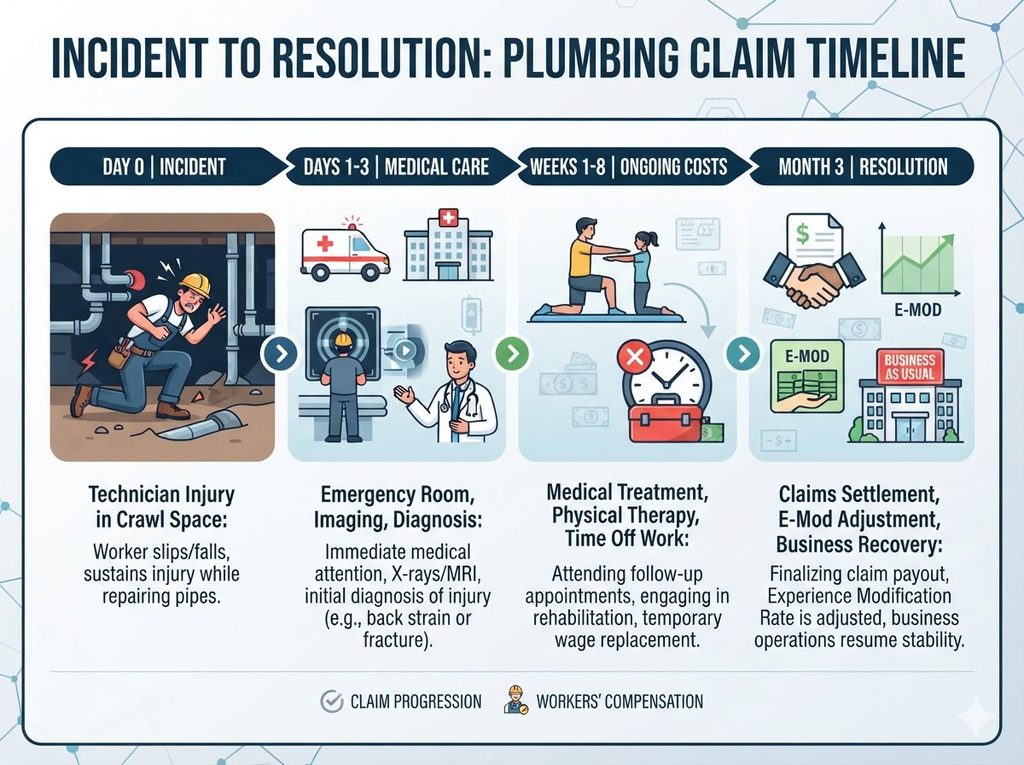
The mod usually uses three years of payroll and losses. It skips the current policy. So a claim this year can affect your price for years.
Small claims affect construction workers compensation costs more than many owners think. The formula weighs how often you have claims more than how big they are. In other words, many small claims can hurt more than one large one. On the other hand, medical-only claims count at just 30%. So report injuries fast, and get workers care early.
Also, a high mod can cost you work. Some owners won’t let you bid with a mod above 1.00. Even so, NCCI says the mod was built to price premium, not to rank safety. (NCCI)
Why Did My Construction Workers Compensation Audit Go Up?
Your construction workers compensation premium starts as an estimate. After the term ends, the carrier audits your actual payroll. Then it bills or refunds the difference.
Audits usually jump for three reasons:
- Payroll grew. You added crews or gave raises during the year.
- Uninsured subs. If a sub had no comp, the auditor may add their pay to yours.
- Wrong class codes. Office staff landed in field codes, or the other way around.
Therefore, keep your records clean all year. Track sub certificates, split payroll by class and keep overtime records. Under NCCI rules, the extra “half” of time-and-a-half can often be left out if your records show it.
What Are the Classification Traps?
In construction workers compensation, class codes set your rate per $100 of payroll. Roofing and steel codes cost far more than carpentry or office codes. So one misplaced worker can swing your bill.
The most common traps include:
- Putting a field supervisor in a clerical code
- Splitting one worker’s pay across codes without records to back it up
- Treating crew members as 1099 contractors
That last one is costly in Illinois. The Employee Classification Act presumes construction workers are employees. To call someone independent, a contractor must meet a three-part test. Penalties can reach $1,500 per violation. Also, each day can count as a new violation. (Illinois Department of Labor)
How Can Contractors Lower Construction Workers Compensation Costs?
There is no single fix. However, these steps often help:
- Write a safety program, and put one person in charge
- Offer light-duty work so injured workers return sooner
- Report every injury to your carrier the same day
- Collect comp certificates from every sub before work starts
- Review class codes with your agent before each renewal
- Use the carrier’s safety services, which are often free
Next, think about the market. Some carriers write comp as part of a whole-account package with general liability, auto and umbrella. Others focus on comp for skilled trades. As an independent agency, we can compare both. Learn more on our workers’ compensation page. Also see how comp fits a full general contractors insurance program.
A Year-End Construction Workers Compensation Checklist
Before December 31, set aside 30 minutes with your office manager. Then work through this list:
- Pull current comp certificates for every sub you paid this year
- Flag any sub whose policy lapsed during a job
- Check that each worker sits in the right class code
- Total overtime pay apart from regular pay
- Get your loss runs and your new mod worksheet
- Tell your agent about any payroll growth now
As a result, your audit goes faster. You also walk into renewal with fewer surprises.
More Construction Workers Compensation Questions
When does a new experience mod take effect?
Usually on your policy’s renewal date. So ask for your mod worksheet before renewal and check it for errors.
Can I exclude myself as the owner?
Sometimes. Illinois lets some owners and officers opt out. However, construction firms face stricter rules, so ask first.
Do I need comp for 1099 workers?
Often, yes. Illinois presumes construction workers are employees unless all three tests are met. Otherwise, your carrier may charge for them at audit.
What should I bring to my audit?
Bring payroll by class, overtime records, sub certificates and sub payments. Also bring your quarterly payroll tax forms.
Should my comp be with the same carrier as my liability?
Often, it helps. One carrier for the whole account can mean one renewal and one claims team. Still, a comp specialist may fit high-hazard trades better. So compare both at renewal.
Get a Construction Workers Compensation Review
Year-end is the best time to fix class codes and sub files. We can review your mod, your last audit and your renewal in one meeting. Request a commercial quote or call Weer Insurance Group at 773-545-2001.