Construction in Chicago doesn’t stop when temperatures drop. Framing, drywall, and concrete work often continue under tarps and plastic sheeting with temporary heaters running around the clock. However, that setup keeps a schedule on track, but it also concentrates several distinct risks in one partially finished building. Builder’s risk insurance can help with the build.
Matching Winter Risks to the Right Policy
Risk
Coverage that usually responds
What to confirm
Fire damaging the structure or stored materials
Builder’s risk insurance
Any heater or fire safety conditions written into the policy
Fire or smoke spreading to a neighboring property
General liability
Limits that fit a dense block with attached buildings
A worker overcome by carbon monoxide
Workers’ compensation
That every crew, including subs, carries their own coverage
Pipes freezing in an unfinished space
Builder’s risk, depending on terms
Whether the policy requires heat to be maintained
The Conditions Many Contractors Overlook
Some builder’s risk policies include protective safeguard requirements, such as keeping heaters attended, maintaining clearances from combustibles, or having extinguishers on each floor. These aren’t suggestions. Falling short of a written condition can complicate a claim, so it’s worth reading that section before the first cold snap.
A Short Cold-Weather Site Routine
Keep heaters clear of tarps, lumber, and insulation
Ventilate enclosed areas and use carbon monoxide detectors
Assign someone to check heaters at the end of each shift
Store propane cylinders according to the manufacturer’s and code guidance
Weer Insurance Group works with contractors across Chicago, from Portage Park to the collar counties, to line up general contractors’ insurance that fits year-round work. To review your builder’s risk insurance conditions before winter, stop by our Belmont Avenue office or reach out through Weer Insurance Group in Chicago, IL.
Why Plumbing Carries Big Insurance Risks—And Why It Matters to Your Bottom Line
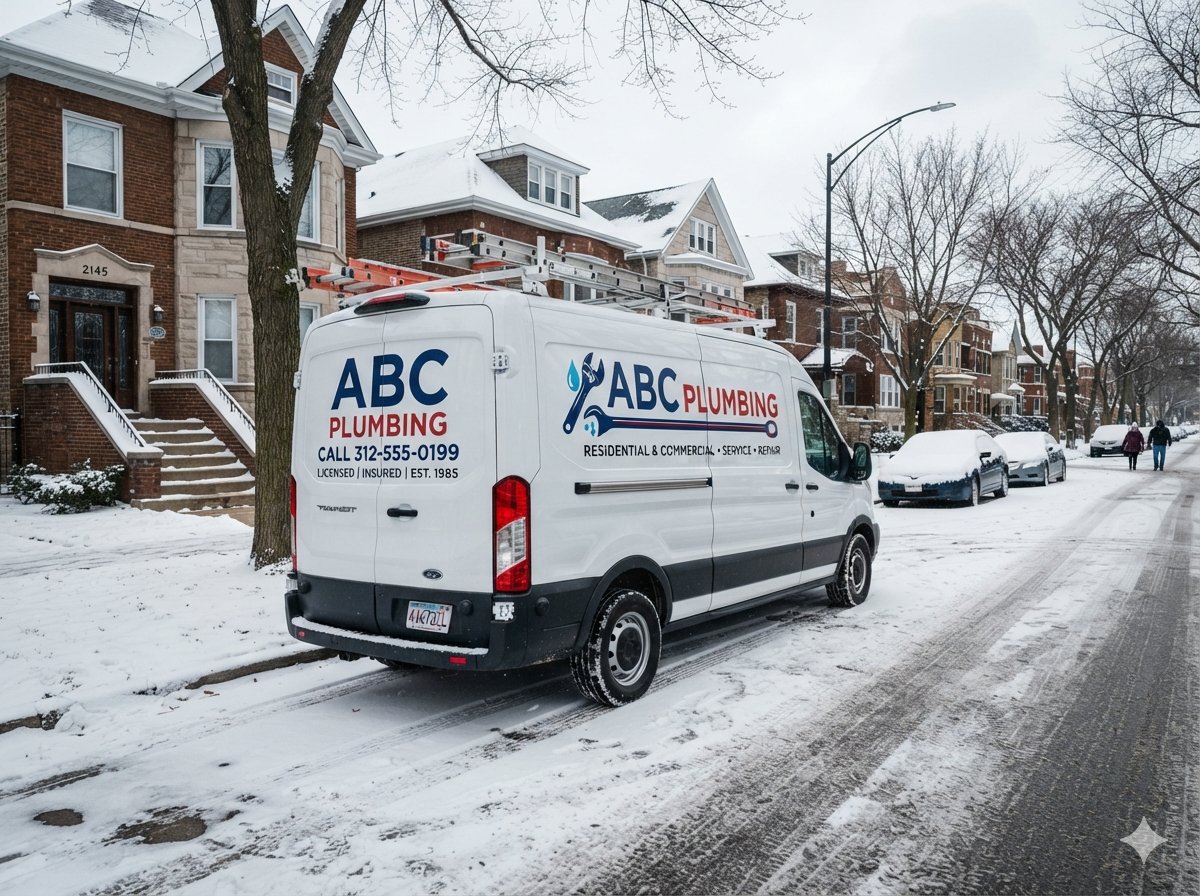
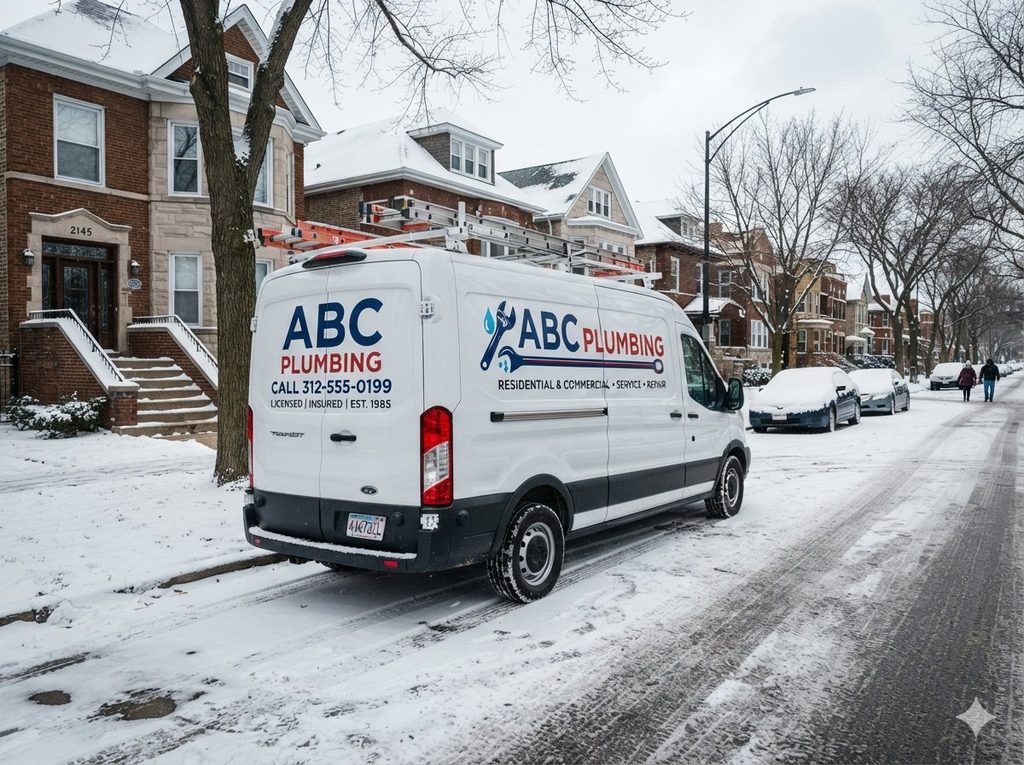
Chicago plumber insurance comes with some of the toughest challenges in the trades. It’s not just about injuries on the job. It’s about the damage your work can cause if something goes wrong.
A burst pipe. A missed shutoff valve. A ruptured line during installation. Any of these can mean $50,000 in water damage to a customer’s home or office. That’s not a claim. That’s a catastrophe.
Plumbers also work in tight spaces: basements, crawl spaces, and roofs. That means fall risks and back injuries happen every day. It’s why carriers treat plumbing as a higher-risk trade.
Here’s the reality: You need two separate insurance programs. Workers’ compensation covers your crew when someone gets hurt. Commercial auto covers your fleet when an accident happens between jobs. Ignore either one, and a single claim can wipe out your profit for the year.
Let’s break down what you actually need.
Chicago plumber insurance: what your auto policy should include
Your commercial auto program must address three specific risks in plumbing work:
Your service trucks and vans
Your fleet is on the road constantly, between emergency calls, supply runs, and scheduled jobs. So you need comprehensive and collision coverage, plus auto liability and medical payments coverage. In addition, Chicago’s winter weather makes uninsured motorist coverage essential.
Why? Because Chicago drivers don’t always carry adequate insurance. A rear-end collision in your service van costs thousands—not just in vehicle repair, but in lost service days and equipment damage.
Hired and non-owned auto coverage (HNOA)
Most plumbers miss this one. Here’s the situation: A technician uses their personal pickup to grab supplies from the wholesale distributor. A subcontractor shows up in their own van for emergency work. An accident happens.
Who’s liable? You are.
HNOA coverage protects you when employees or subcontractors use personal vehicles for business. Ask for it explicitly. Many carriers don’t include it automatically. This is one of the most critical gaps we see in plumber policies—don’t be caught without it.
Liability limits that match your market
General contractors and property managers expect plumbing subcontractors to carry $1 million per occurrence liability. If your limit is $500K, you’re either paying out-of-pocket for higher coverage on each bid, or you’re losing jobs.
Check your limits now. It costs just a few dollars more per year to meet the market standard. Why lose a job over this?
What Actually Drives Your Workers’ Comp Cost in Illinois?
Illinois requires workers’ compensation if you have even one employee. Period. It’s mandated under the Illinois Workers’ Compensation Act (820 ILCS 305).
But here’s what most plumbers don’t understand: Your cost isn’t fixed. It’s based on three factors.
Factor 1: Payroll
The more workers you hire, the higher your premium. Workers’ comp is calculated as a percentage of payroll. If your annual payroll jumps from $200,000 to $300,000, your premium goes up. It’s straightforward math.
Factor 2: Your claims history (the e-mod)
This is where it gets interesting.
Carriers assign you an “experience modification factor,” or e-mod. It’s a multiplier. Plumbers with clean records pay close to the base rate—maybe 0.85× (a 15% discount). Plumbers with multiple claims pay a surcharge—maybe 1.15× or 1.25× (a 15–25% increase).
Here’s the kicker: One serious claim affects your rate for three years. A technician scalded by a burst? That’s on your record. A back injury from improper lifting? That follows you.
But on the flip side, a three-year clean record? That discount adds up fast.
Factor 3: Safety practices
Carriers track patterns. Multiple back injuries signal poor lifting protocols. Repeated scalding incidents suggest weak burn protection. Slips in crawl spaces point to missing safety gear. OSHA’s construction safety resources are a good place to start closing those gaps.
When you invest in OSHA-approved plumbing safety training, proper PPE (burn gloves, slip-resistant boots, back support), and confined-space protocols, you don’t just protect your crew. You save thousands in premiums.
Bottom line: Don’t expect a flat fee. Instead, your Chicago plumber insurance cost depends on your payroll, your claims history, and your safety record. That’s why working with an experienced agent who understands plumbing operations matters.
A Real Claim Story from Chicago
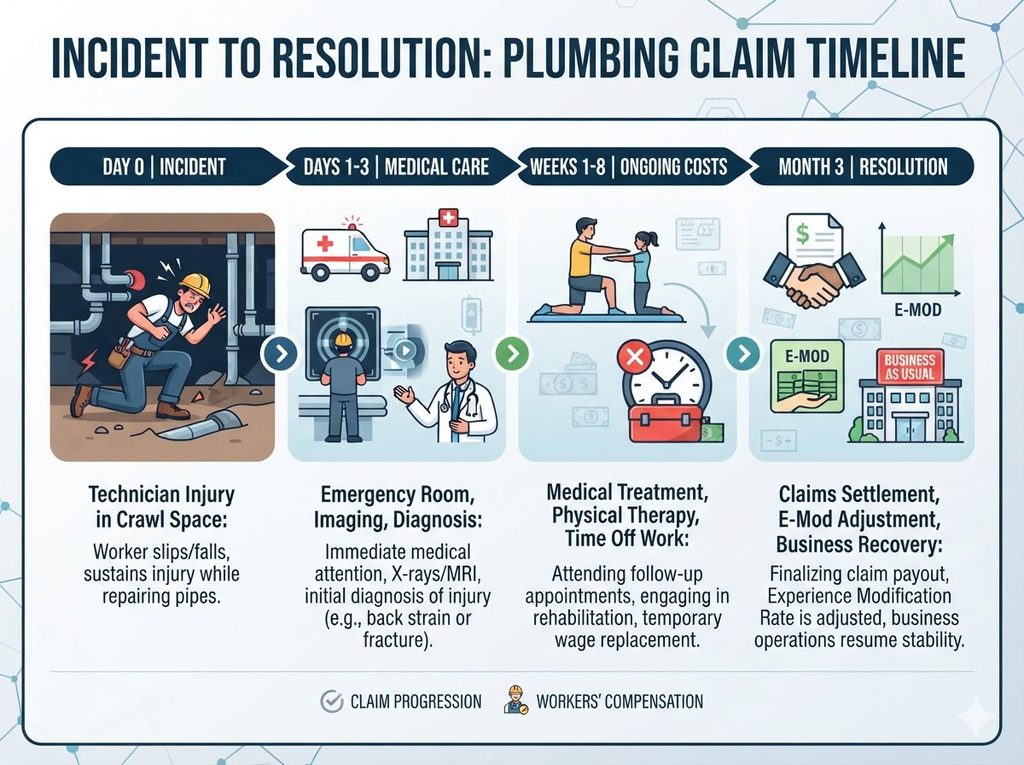
A residential plumbing contractor on the South Side runs a three-person crew. November. Cold snap. He gets called to a residential building with a burst pipe in a crawl space.
One technician works in a stooped position for an hour. Removing the frozen section. Accessing tight spots. Then—sharp pain in his lower back. He can’t straighten up.
Urgent care. MRI. Diagnosis: Herniated disc. Restrictions: No lifting over 10 pounds for six weeks. Physical therapy. Two months off work.
If he didn’t have workers’ comp:
The technician would sue him directly. Medical bills? Out of pocket—$8,000 for imaging and therapy. No paychecks for two months? That comes from the business. With two technicians left, he loses winter emergency calls—peak season for plumbing. Premiums skyrocket at renewal—20%+ increase for three years.
Total damage: Over $40,000 plus lost revenue.
If he had proper coverage:
Workers’ compensation covered everything. The carrier handled the claim. The technician got his wages while recovering. The e-mod adjustment at renewal? Modest. Around 1.05. The business stayed operational.
He also had commercial auto coverage because one technician had been hit earlier that year while parked at a customer’s home. That accident? Handled under the fleet policy. Not a personal claim.
Two separate incidents. Two separate programs. Business survives intact.
Certificates of Insurance: The Paperwork That Stops You From Working
Property managers and general contractors won’t let you start work without a Certificate of Insurance on file.
More than that? Many want it dated within 30 days. Some request updates monthly during long projects.
What does a COI prove? That you’re covered for workers’ comp, general liability, and commercial auto.
What happens without it? You’re off the job site. Mid-project. No exceptions.
What if it’s outdated? You’re shut down. That means the blocked toilet or leaking pipe sits unfixed while you scramble to get your insurance updated.
That’s a relationship killer.
Smart plumbers make this automatic:
First, ask your agent for same-day turnaround on certificates. Some carriers now offer self-service portals where you download them instantly.
Second, request a fresh COI before you think you’ll need it. Build a buffer into your workflow.
In Chicago’s competitive residential market, being the plumber who shows up with paperwork ready is the plumber who gets the repeat call.
Is workers’ comp required for plumbers in Illinois?
Yes. Illinois requires workers’ comp for almost every employer with even one employee, full- or part-time. Skipping it exposes you to fines, stop-work orders, and lawsuits from injured workers.
What workers’ comp class code do plumbers use?
Most plumbing contractors fall under NCCI class code 5183 (Plumbing NOC and Drivers). Your premium is a rate per $100 of payroll in that code, adjusted by your e-mod. Office staff usually go under clerical code 8810, which costs far less.
Do I need commercial auto if my techs drive their own trucks?
Yes, in most cases. Hired and non-owned auto (HNOA) coverage protects you when employees use personal vehicles for work. If the business owns or leases vans, you need a commercial auto policy as well. Personal auto policies often exclude business use.
How much liability coverage do GCs require from plumbing subs?
Most ask for $1 million per occurrence and $2 million aggregate in general liability, plus $1 million in auto liability. Many also require additional insured status and a waiver of subrogation. Larger commercial jobs often add an umbrella.
Where can I get a Chicago plumber insurance quote?
An independent agency can compare several carriers at once. Have your payroll, vehicle list, and three years of loss history ready. Then call Weer Insurance Group at 773-545-2001 or request a quote online.
How Weer Insurance Group Helps Chicago Plumbers
We’ve spent years building partnerships with 30+ carriers that specialize in trades insurance.
We understand plumbing. We know back injuries and scalding are everyday hazards. We know winter ramps up your revenue and your exposure at the same time. We know Illinois law. And we know that a missing COI can cost you more than the insurance itself.
Whether you’re a solo technician adding your first helper or a growing firm managing multiple service trucks, we build a Chicago plumber insurance program that covers your workers, your fleet, and your reputation.
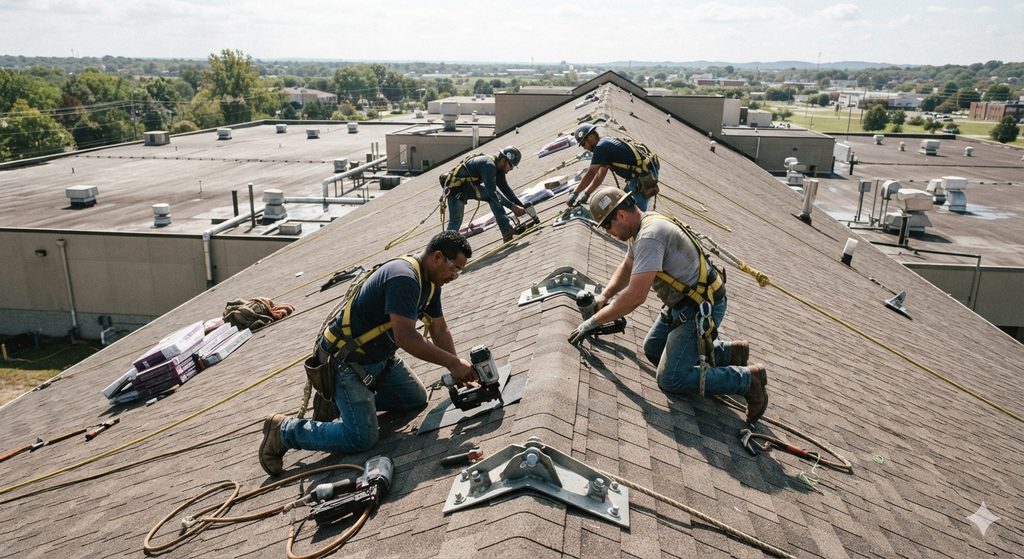
Quick answer: Chicago roofing contractor insurance costs more than coverage for almost any other trade. Roofing is the most cited trade in federal OSHA fall-protection enforcement. It also carries one of the three highest workers’ comp rates in construction (NCCI code 5551). Still, roofers who document their safety programs and control their EMR can save thousands a year. Keeping subcontractor certificates current and closing coverage gaps lowers costs even more.
Last updated: October 23, 2026
Why Chicago roofing contractor insurance costs more
Roofing sits at the top of two lists no contractor wants to lead: OSHA enforcement and workers’ comp rates.
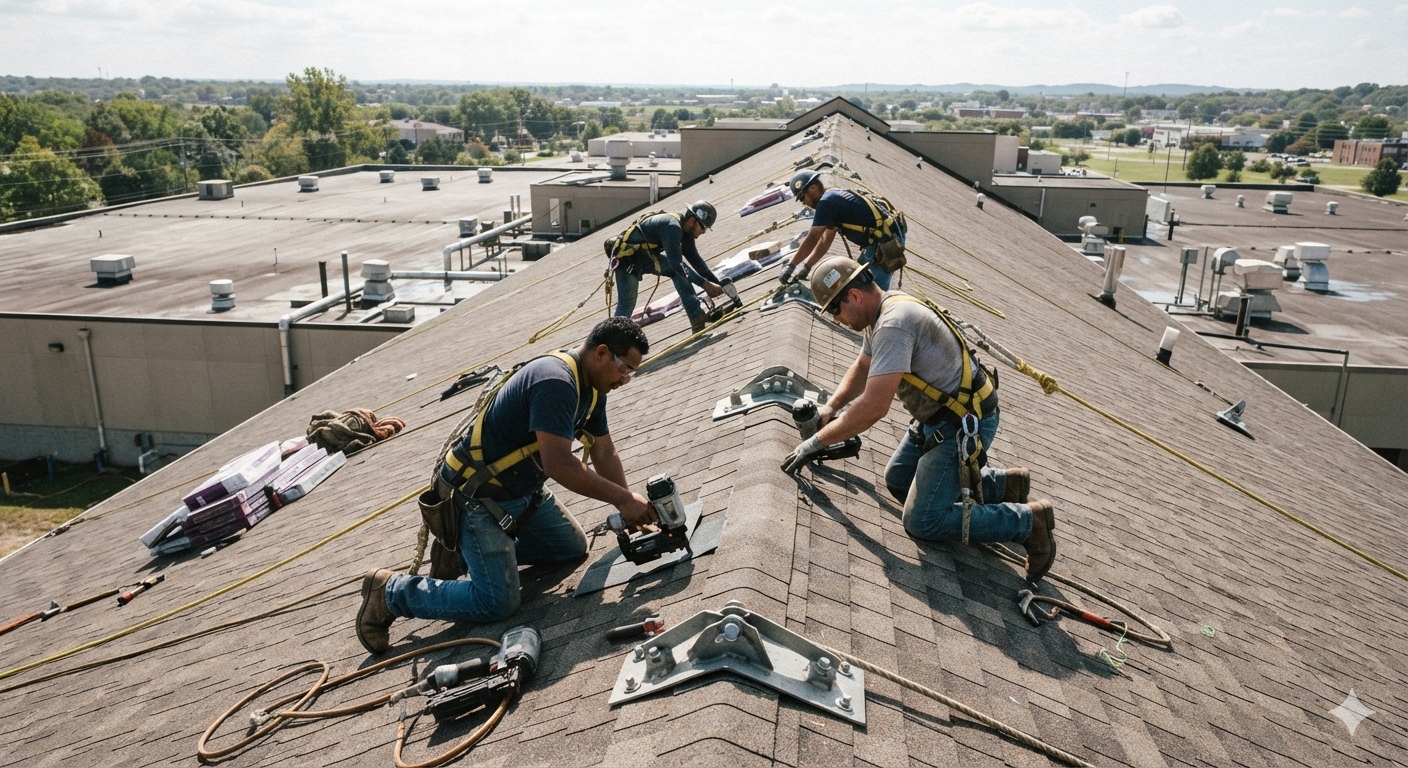
Federal OSHA enforcement data shows roofing contractors drew 86.5 citations per 100 inspections in fiscal year 2025. That is the highest rate of any construction trade. Framing came next at 83.5, followed by siding (43.6), plumbing and HVAC (24.2), masonry (20.4), and electrical (19.3). Roofing alone drew more than half of the 5,914 federal fall-protection citations that year. The average penalty was about $7,320 per citation. In fact, fall protection (29 CFR 1926.501) has topped OSHA’s most-cited list for 15 years in a row. Roofing is the biggest reason why.
On the workers’ comp side, NCCI class code 5551 (“Roofing — All Kinds and Drivers”) ranks among the three most expensive codes in construction. Carriers price it high because the loss data supports it. Falls from roofs and ladders cause more severe claims than almost any other construction injury. Long-term disability, multiple surgeries, and wrongful death claims are all more common in roofing. As a result, workers’ compensation is often a roofer’s biggest insurance cost.
Then add Chicago’s weather cycle. Hail and wind claims spike every spring and summer. Next comes a rush of tear-off and re-roof work before winter. So both frequency (how often things go wrong) and severity (how much it costs) work against you at renewal.
What Chicago roofing contractor insurance should include
A complete Chicago roofing contractor insurance program usually has six parts. Skip one, and a small claim can turn into a lawsuit. A gap can also sink a signed contract when a general contractor’s risk manager reviews your certificate of insurance.
General liability (GL). Covers injury and property damage to others. Think of a dropped tool that dents a car, or a tear-off that lets rain into a client’s home. Every general contractor and property manager will ask to see your general liability on a certificate before you start work.
Workers’ compensation. Illinois requires it for almost every employer with even one employee. Carriers price it mainly on your class code 5551 payroll and your experience modification rate (EMR). For most roofers, it is the largest line in the insurance budget.
Commercial auto. Covers the trucks and trailers that haul ladders, shingles, and debris between jobs. A personal auto policy won’t cover a vehicle titled to the business or used mainly for work. It also excludes the tools and materials in the bed. Learn more about commercial auto insurance.
Coverage for tools, large verdicts, and finished roofs
Inland marine (equipment coverage). Protects ladders, lifts, nail guns, and other tools that move from site to site. Standard property insurance does not follow your equipment off-premises.
Umbrella / excess liability. Sits on top of your general liability, auto, and employers’ liability limits. Jury awards in construction injury cases keep growing. That’s why most brokers now suggest $3–10 million in umbrella limits for roofers doing real commercial volume. The old standard of $1 million in primary GL is no longer enough.
Completed operations coverage. A leak that shows up eight months after the job is still your liability. So check your GL policy for a roofing exclusion or a sublimit on completed operations. We find this gap often when we review a roofer’s current policy.
What drives your premium up or down
Factor
Why it matters
Experience modification rate (EMR)
The single biggest lever on your workers’ comp premium. An EMR above 1.00 can add tens of thousands of dollars a year; staying at or below 1.00 signals a strong safety record to underwriters.
Residential vs. commercial mix
Commercial and multi-family roofing carries different liability exposure than single-family residential work, and carriers price the two differently.
Documented fall protection program
Written procedures, harness and anchor point documentation, and toolbox-talk records give an underwriter something concrete to price against — “we’re careful” is not a rating factor, a program is.
Subcontractor use and their COIs
If you use subs and don’t collect and verify their certificates of insurance, their claims can flow back onto your policy — and your own GL premium reflects that exposure whether or not a sub ever gets hurt.
Payroll, revenue, and years in business
Standard rating factors, but roofing’s severity means small changes here move the needle more than they would in a lower-hazard trade.
Storm/CAT claim history
A book of hail and wind damage repair work brings its own claims pattern that carriers track separately from routine installation work.
The Certificate of Insurance problem that costs roofers bids
Today, every general contractor, property manager, and municipality in the Chicago area screens subcontractor COIs before work starts.
Roofing subs get flagged more often than almost any other trade. In most cases, the problem traces back to how the Chicago roofing contractor insurance policy was set up.
The most common problems we see:
Additional insured endorsement missing or worded wrong. Most GC contracts require your GL policy to name the GC as an additional insured. It must also be on a primary and non-contributory basis. A plain certificate holder line isn’t enough.
Waiver of subrogation not included. Many commercial contracts and property management agreements require it by name.
Excluded operations. Some policies carry a roofing exclusion or a steep-slope or height sublimit. You may not notice it until a claim is denied or a reviewer flags the endorsement.
Umbrella limits that don’t match the contract. A $1M/$2M policy with no umbrella rarely wins commercial or multi-family bids in Chicago. Instead, $3–5M in total limits is becoming the baseline ask.
Has a red-flag COI ever held up a bid or cost you one? The fix almost always happens when your agent builds the policy, not when someone requests the certificate. So talk with your agent before your next bid deadline, not after.
Five steps to lower your Chicago roofing contractor insurance costs
Pull your EMR and understand what drives it. If it’s above 1.00, ask your agent which claims affect it. Also ask how long they will stay in your experience period.
Put your fall protection program in writing. Underwriters price written programs better than verbal ones. A one-page policy, plus a log of harness checks and toolbox talks, is often enough.
Audit your subcontractor COI file. Every sub on every job needs a current certificate naming you as additional insured. Add a waiver of subrogation where your contracts require one.
Check completed operations and roofing endorsements line by line. Don’t assume a prior carrier’s GL policy covers roofing at full limits. Ask specifically.
Match your umbrella limits to your actual contracts. Moving from residential to commercial and multi-family work? Then your umbrella needs have likely grown, even if no one has flagged it yet.
Frequently asked questions
How much does Chicago roofing contractor insurance cost?
It depends on your revenue, payroll, EMR, and mix of residential and commercial work. So no single number fits every roofer. The best way to know is an apples-to-apples comparison against your current program, not a rate you saw online.
Is workers’ compensation required for roofing contractors in Illinois?
Yes. Illinois requires workers’ comp for almost all employers with employees, including sole proprietors with even one worker. Roofing’s class code 5551 is also rated among the highest in construction.
What is an EMR, and why does it matter so much for roofers?
Your experience modification rate (EMR) compares your workers’ comp claims to other companies doing similar work. An EMR of 1.00 is average. Below 1.00 means better claims experience and a lower premium. Above 1.00 means the opposite. Because roofing claims already run high, EMR swings move real dollars.
Do I need an umbrella if I already have $1 million in general liability?
For most roofers doing commercial, multi-family, or municipal work in the Chicago area, yes. Many contracts now require $3–5 million or more in combined limits. A $1 million primary policy alone often won’t meet that.
Why did a general contractor reject my certificate of insurance?
The usual causes are a missing or poorly worded additional insured endorsement, or no waiver of subrogation. A hidden roofing exclusion or height sublimit can also trigger it. So can umbrella limits that fall short of the contract.
Get your Chicago roofing contractor insurance reviewed before your next bid
Weer Insurance Group works with artisan contractors and roofing companies across Chicago, the north and northwest suburbs, Wisconsin, and Indiana. We focus on exactly this kind of review: EMR analysis, additional insured and waiver language, umbrella limits, and sub COI compliance. Has a certificate ever held up one of your bids? Or has it been a while since anyone checked your program against current contracts? Either way, we’re happy to take a look.
Weer Insurance Group is an independent insurance agency with offices in Chicago and Spring Grove, Illinois, serving contractors throughout Illinois, Wisconsin, and Indiana.
Sources
U.S. Occupational Safety and Health Administration (OSHA), federal fall-protection enforcement data, fiscal year 2025
National Council on Compensation Insurance (NCCI) classification data, class code 5551 (Roofing — All Kinds and Drivers)


 Click to Call
 Send us a Text
 Get Directions