
 Click to Call
  Send us a Text
  Get Directions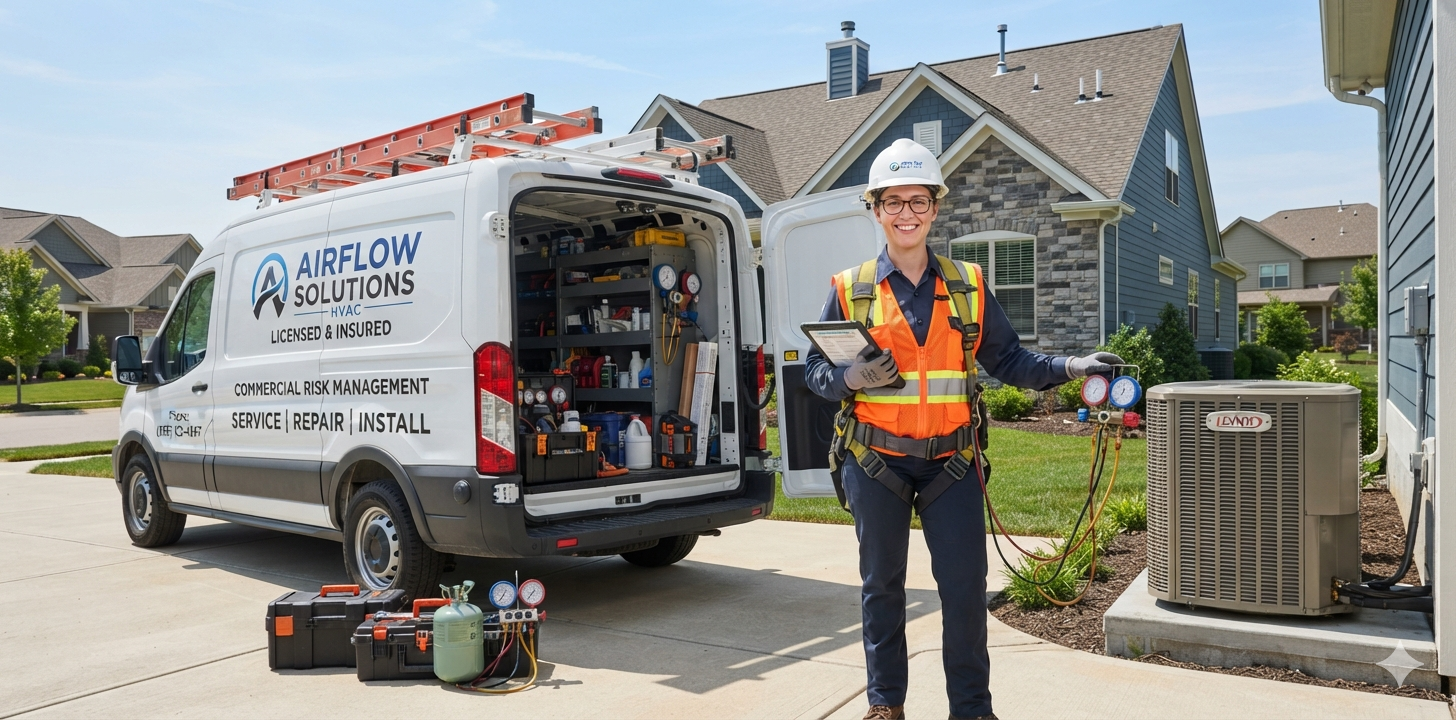
Essential Auto and Workers’ Comp Insurance for Chicago HVAC
Why HVAC Work Carries Outsized Insurance Risk
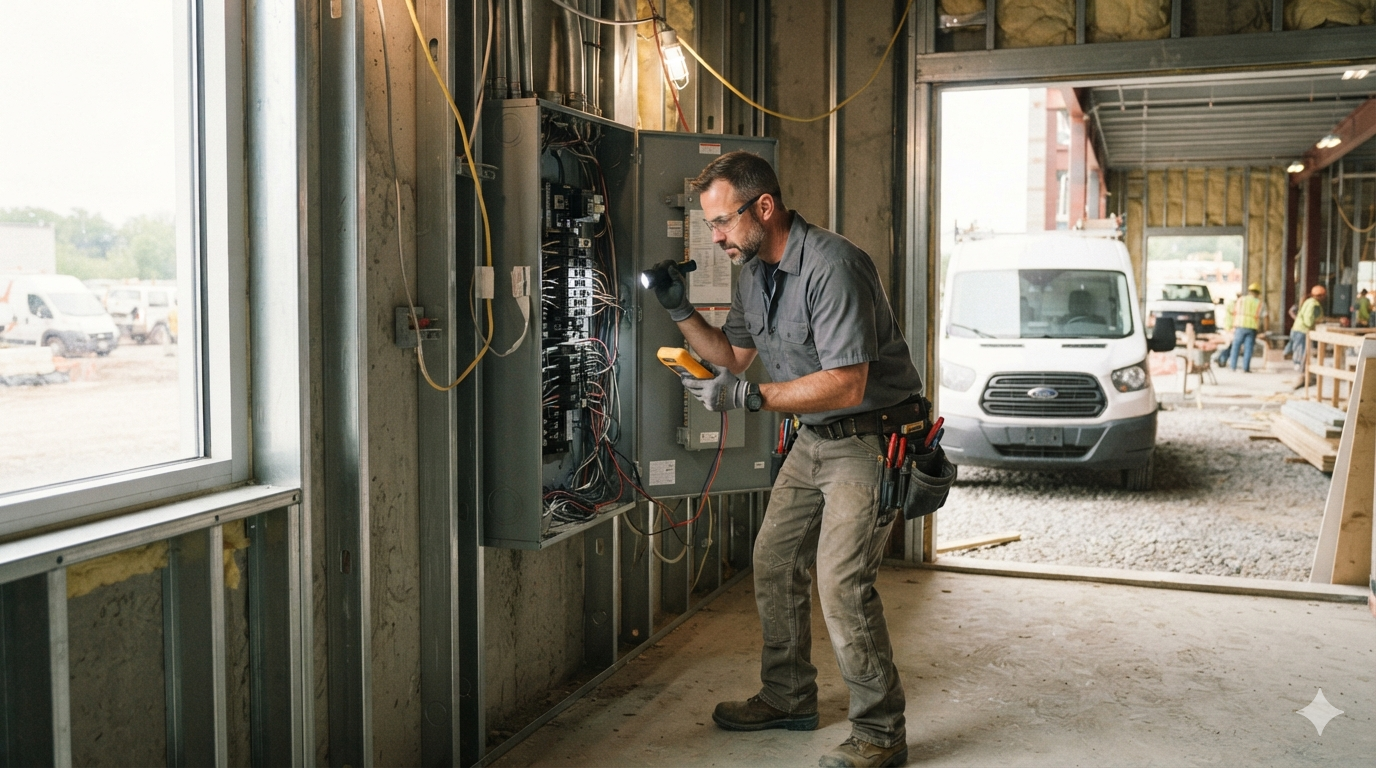
HVAC technicians face some of the highest injury rates in skilled trades. Moreover, the Bureau of Labor Statistics shows non-fatal injuries among heating and air-conditioning workers at 130 per 10,000 annually. This is more than twice the rate for all construction trades.
Additionally, falls from ladders and roofs are everyday hazards. Moreover, burns from furnaces and refrigerant exposure, and repetitive strain injuries, are also common. This is why HVAC insurance Chicago is important for contractors.
However, the insurance picture doesn’t stop at the job site. Your exposure has two critical touch-points:
Workers’ compensation covers your crew when someone gets hurt on a job—whether that’s a technician burned during a furnace install, a helper falling off a ladder, or a driver injured while servicing a rooftop unit.
Commercial auto insurance protects your fleet when the risk moves. Your service vans and trucks traveling between jobs, loaded with expensive tools and equipment, are rolling business assets that need specific coverage—especially if employees or subcontractors use their personal vehicles for work.
Ignore either one, and one bad incident can wipe out a year’s profit or sink your company entirely.
What Should Be in Your Commercial Auto Policy?
Your commercial auto program needs to address three layers of HVAC fleet risk:
Service trucks and vans. Your primary fleet is likely your most valuable and most-driven asset. You need comprehensive and collision coverage (especially if financed), commercial general liability, and medical payments. In Chicago’s dense urban routes and winter weather, uninsured motorist coverage is essential.
Hired and non-owned auto (HNOA) coverage matters for HVAC insurance Chicago. If a technician uses a personal pickup to grab parts, you’re liable for accidents. Subcontractors arriving in their own vans can create liability gaps for your projects. A clear HNOA policy helps close those gaps during on-site service and repairs.
HNOA coverage bridges those gaps and protects you when employees or subs operate personal vehicles for work. Many policies don’t include this by default; ask for it explicitly. Ensure your policy reflects your active fleet and contractor practices. This attention improves claims handling and liability management.
Liability limits that match your market. General contractors routinely require HVAC subcontractors to carry $1 million per occurrence/$2 million aggregate auto liability before stepping onto a commercial site. If your current limits are $500K/$1M, you’re either paying out-of-pocket to bump them up or losing bids. Verify your limits when you quote jobs; it costs just a few dollars more per year to meet the market standard.
What Drives Workers’ Comp Cost for HVAC Contractors in Illinois?
Illinois requires all employers with one or more employees to carry workers’ compensation insurance, as mandated under 820 ILCS 305. The state doesn’t set a flat rate; instead, your cost depends on three primary factors:
Payroll. The larger your crew, the higher your premium. Workers’ comp is calculated as a percentage of payroll (the “rate” per $100 of payroll), so adding a technician directly increases your annual cost.
Experience modification factor (e-mod). This is the multiplier that reflects your claims history. Contractors with no or few claims pay close to the state baseline rate. Contractors with multiple injuries or high-cost claims pay a surcharge (e.g., 1.15 or 1.25× the base rate). One serious claim can affect your e-mod for three years. Conversely, a clean record earns a discount (e.g., 0.85×).
Safety practices and incident trends. Even before a claim settles, carriers and risk consultants track which contractors experience recurring incidents. A history of falls, burns, or vehicle accidents signals poor safety culture—and insurers price that risk accordingly. Investing in OSHA-approved training, fall protection equipment, and vehicle maintenance protocols doesn’t just save lives; it saves thousands in premiums over time.
Don’t expect a simple answer like “HVAC contractors pay $X per year.” Your cost is unique to your payroll, claims history, and underwriting profile. Work with an experienced agent who will request your last three years of payroll and loss history to get an accurate quote and identify cost-reduction opportunities.
A Real Claim Story
A commercial HVAC contractor in Pilsen with five technicians was called to replace a furnace in a residential property in November. The job involved removing the old unit from a basement and installing a new high-efficiency model on the first floor. One technician was carrying the old furnace down the basement stairs when he slipped on a wet step, fell backward, and fractured his collarbone and several ribs. The injury required emergency room care, two weeks off work, and six months of physical therapy.
Without proper coverage: The technician would have sued the contractor directly, claiming negligence. The company’s medical costs alone ($18,000 for ER and imaging) would come out of pocket. Workers’ comp premiums would spike—likely a surcharge of 25% or more on future renewals for three years. The crew would be short-handed during winter, the busiest season. Total impact: close to $75,000 in direct costs plus lost revenue.
With proper coverage: Workers’ compensation covered all medical and lost-wage benefits. The contractor’s insurance carrier handled the claim, and the business stayed insured. The claim was recorded on the company’s experience record, but the coverage meant no lawsuit, no out-of-pocket medical bills, and the injured technician was protected. The e-mod adjustment at renewal was modest—around 1.08—because the claim was typical for the trade and handled appropriately.
This contractor also carried commercial auto insurance because one of his techs had been rear-ended in the service van earlier that year while heading to a job. That accident was covered under the fleet policy, not dragged into a personal claim. Having both programs meant two separate incidents didn’t compound into a single catastrophic loss.
Certificates of Insurance: The Paperwork That Can Cost You the Job
General contractors managing apartment renovations, office retrofits, and commercial HVAC projects will not let you start work without a Certificate of Insurance (COI) on file. Many require it to be current—dated within 30 days—and some want updates monthly or quarterly during extended projects.
A COI proves to the GC (and their insurer) that you’re covered for workers’ comp, general liability, and commercial auto. Without it, you’re off the job site. With an outdated one, you’re shut down mid-project, which can cost you days and relationships.
Smart HVAC contractors make COI management automatic: ask your agent for same-day or next-day turnaround when you need new certificates. Some carriers now offer self-service portals where you can download certificates instantly. Build a buffer into your workflow—request a fresh COI before you think you’ll need it. In the competitive Chicago market, being the contractor who shows up with paperwork ready is the contractor who gets the repeat call.
How Weer Insurance Group Helps Chicago HVAC Contractors
Weer Insurance Group has spent years building partnerships with 30+ carriers that specialize in trades insurance. We match your business profile—your payroll, fleet size, claims history, and growth plans—to the right program so you get the coverage you actually need at a competitive rate.
Unlike a one-size-fits-all online quote, we spend time understanding HVAC work. We know that fall protection and burn injuries are industry-standard risks. We know that your winter season ramps up in September and peaks in December. We know Illinois law. And we know that a missing COI or an outdated certificate can cost you more than the insurance itself.
Whether you’re a solo technician ramping up to a five-person crew or a growing firm heading into fall, we’ll build a program that covers your workers, your fleet, and your reputation.
Ready to get a quote or talk through your coverage gaps? Call us at 773-545-2001 or reach out to discuss what a real HVAC program looks like. If you’re preparing for the heating season, now is the time to lock in your coverage and make sure your paperwork is current.
Sources: Bureau of Labor Statistics (Occupational Injury and Illness Data, 2024); OSHA (Hazard Analysis for HVAC Work); Illinois Public Act 84-1365 (820 ILCS 305, Workers’ Compensation Act). Example claim scenarios are composites based on typical incidents and do not represent any single business or individual. Actual claim costs and outcomes vary by circumstance, coverage limits, and carrier.