

 Click to Call
 Send us a Text
 Get Directions
Wholesale Distributor Insurance: What Amazon’s New Rules Mean for You
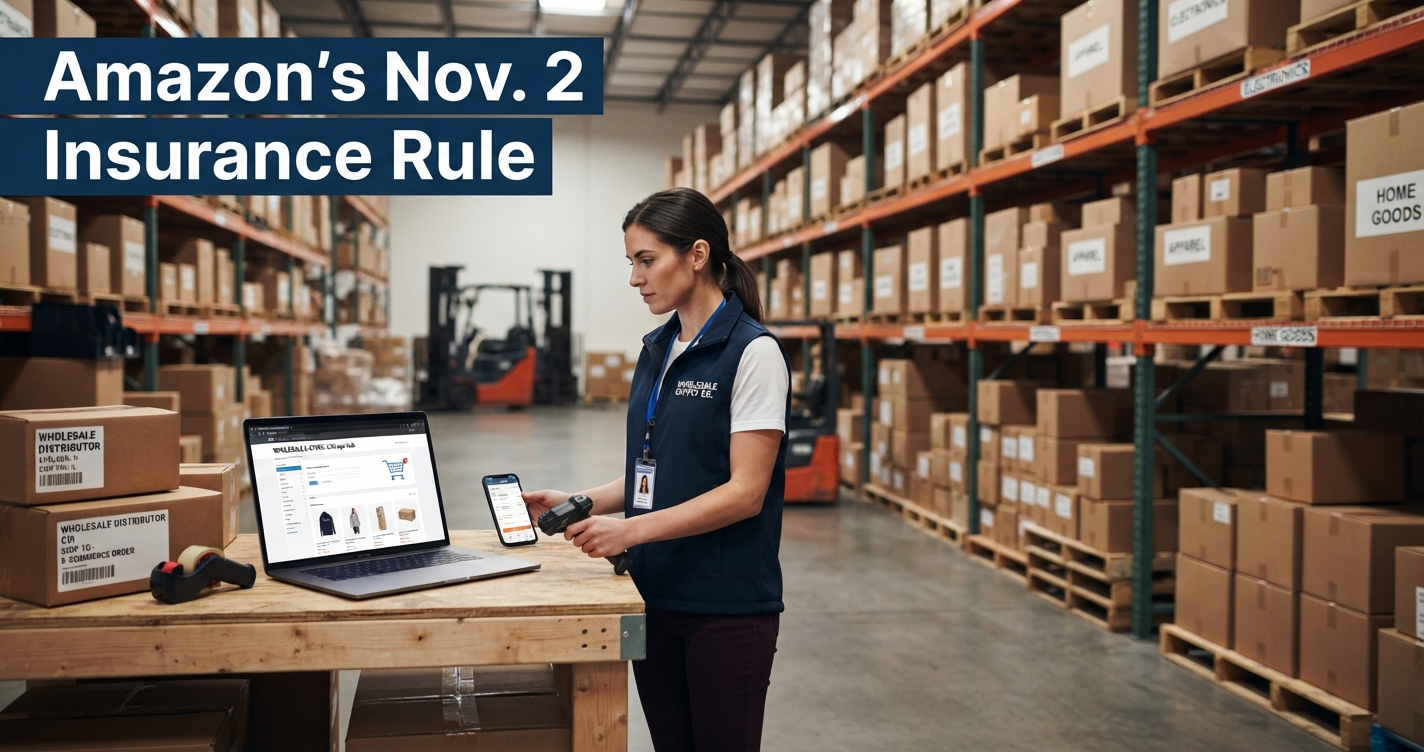
Wholesale distributor insurance just got more urgent. On November 2, 2026, Amazon changes its liability insurance rules for sellers. As a result, many distributors who sell online will need a $1 million policy, even with low sales. At the same time, landlords and retail buyers are asking for more proof of coverage than ever.
At Weer Insurance Group, we see this every week. In fact, two wholesale accounts came to us this month alone. Both had the same problem. They sold products they did not make, yet they carried the risk anyway. So here is what every distributor, importer, and e-commerce wholesaler should know.
What Is Wholesale Distributor Insurance?
Wholesale distributor insurance is not one policy. Instead, it is a package built around how you buy, store, and sell products. Most programs include:
- General liability with products-completed operations coverage
- Commercial property for your inventory and equipment
- Hired and non-owned auto for staff who drive for errands
- Umbrella or excess liability to raise your limits
- Product recall for food, candy, and cosmetics
- Workers’ compensation for warehouse staff
- Inland marine or cargo for goods in transit
In other words, the right mix depends on what you sell and where it goes. For a closer look at the core policy, see our page on general liability insurance.
Amazon’s November 2, 2026 Insurance Rule
First, the big change. Until now, Amazon required liability coverage only after a seller passed $10,000 in gross proceeds in one month. However, starting November 2, 2026, that threshold goes away for 11 “enhanced safety” categories. These include cosmetics, consumable and ingestible products, children’s products, and lithium battery products, among others.
That means a candy, beauty, or supplement distributor may need coverage no matter how much it sells. Furthermore, the rule applies to existing listings, not just new ones. (My Amazon Guy and EcomCrew have good summaries of the change.)
What Amazon Requires in Your Policy
According to Amazon’s published terms, your policy must have:
- Commercial general, excess, or umbrella liability coverage
- $1 million per occurrence and $1 million in total
- A deductible of $10,000 or less
- An occurrence-based form that covers every product you list
- “Amazon.com Services LLC and its affiliates and assignees” as an additional insured
- A named insured that matches the legal name on your seller account
- A carrier with worldwide claims handling
Reports say Amazon will give affected sellers 45 days to upload proof. Otherwise, listings in those categories can be turned off. So if you sell in these categories, start now. Underwriting takes time.
Why Distributors Get Sued for Products They Didn’t Make
Many owners assume the maker carries the risk, so they skip wholesale distributor insurance. Unfortunately, that is not how product liability works. When a customer is hurt, every company in the chain can be named in a lawsuit. That includes the maker, the importer, the wholesaler, and the store.
This risk grows when you import. For example, if the factory is overseas, a plaintiff may have no practical way to sue it. As a result, the U.S. importer or distributor often becomes the main target. Markel calls this one of the biggest pitfalls distributors face.
Ask Your Suppliers for a Vendor’s Endorsement
A vendor’s endorsement adds your company to the maker’s product liability policy. Consequently, their insurer may defend you first. Still, it does not replace your own coverage. Endorsements can be narrow, and overseas policies may not respond in U.S. courts.
Occurrence vs. Claims-Made: The Trap Most Buyers Miss
Next, check the policy form. Some carriers offer distributors a claims-made policy, often with high limits at a tempting price. However, product claims can show up years after the sale.
Here is why that matters. A claims-made policy usually starts at a “retroactive date.” If you never had insurance before, that date is the first day of the policy. Therefore, nothing you sold before that day would be covered. On the other hand, an occurrence policy works differently. It covers any injury that happens while the policy is active, even if the claim comes years later.
We saw this firsthand this month. A long-running Chicago distributor with no prior coverage was offered a claims-made option. On paper, it looked fine. In reality, it would have left years of past sales uncovered. So we pushed for an occurrence program instead.
In addition, Amazon and most landlords require occurrence form. Simply put, a cheaper claims-made quote may not even meet your contract.
Wholesale Distributor Insurance for Your Warehouse
Your inventory is often your largest asset. Yet many distributors are underinsured on commercial property. Underwriters will ask about:
- Building construction and sprinklers (wet, dry, or ESFR)
- Central-station alarms and cameras
- Flammable goods, such as alcohol-based perfume, aerosols, or lithium batteries
- How those goods are stored, and how much you keep on hand
- Your highest inventory value, including the holiday peak
For instance, inventory that runs $750,000 most of the year may climb to $1 million in the fourth quarter. In that case, a peak-season endorsement can raise your limit for those months. Meanwhile, business income coverage protects your cash flow if a fire or water loss shuts you down.
Lease and Retailer Requirements for Wholesale Distributor Insurance
Often, the first push for coverage comes from a lease or a vendor agreement. Typical requirements include:
- $1 million / $2 million general liability, with a products-completed operations aggregate
- Additional insured status for ongoing and completed operations
- Primary and non-contributory wording
- Waiver of subrogation on general liability, auto, and workers’ comp
- An umbrella that follows form over liability, auto, and employers liability
- Carriers rated “A” or better by AM Best
- 30 days’ notice of cancellation
Before you sign, send us the insurance section of your lease. That way, we can match the policy to the contract the first time.
Product Recall Coverage for Food, Candy, and Cosmetics
Product liability pays when someone is hurt. By contrast, product recall insurance pays to pull product off the shelves. That can include notices, shipping, disposal, and lost profit. Most general liability policies exclude recall costs.
For food, candy, and cosmetics companies, adding recall to your wholesale distributor insurance is worth pricing. Also, a written recall plan and lot-level tracking can improve your terms.
What Underwriters Will Ask You: A Checklist
To get the best price, have these ready:
- Annual revenue, split between wholesale and online sales
- A product list by category, with the share of sales for each
- The share of goods that are imported, and whether you are the importer of record
- Any private-label or repackaged products
- Warehouse details: square feet, construction, sprinklers, and alarms
- Your normal and peak inventory values
- How you store any flammable or hazardous items
- Prior insurance and loss history, or a short note on why you had none
- The insurance section of your lease and key customer contracts
- Your recall plan and lot tracking, if you have them
Above all, answer accurately. A wrong “yes” on an application can cost you coverage after a claim.
What Does Wholesale Distributor Insurance Cost?
Cost depends on what you sell, your revenue, and where it goes. For example, a small distributor of low-risk goods may pay a few thousand dollars a year. However, a large importer of cosmetics, perfume, or food is a different story. Once you add an umbrella and recall, the total can run well into five figures or more. That is why the structure matters as much as the price.
Why Work With an Independent Agency
Distributor risks rarely fit a standard business owner’s policy. As an independent agency, we can shop many carriers at once. That includes standard, surplus lines, and recall markets. As a result, you get one coordinated program instead of a patchwork. We work with wholesalers, importers, and online sellers across Illinois, Wisconsin, and Indiana.
Frequently Asked Questions
Do I need insurance to sell on Amazon?
It depends on your category and sales. Starting November 2, 2026, sellers in 11 enhanced safety categories need a $1 million occurrence policy, regardless of sales. For other categories, coverage is still required after $10,000 in monthly gross proceeds.
Does my manufacturer’s insurance cover me as a distributor?
Only if you are added through a vendor’s endorsement, and even then coverage can be limited. Therefore, you should carry your own product liability coverage.
Is product liability part of general liability?
Usually, yes. Most general liability policies include products-completed operations coverage. However, some policies limit or exclude certain products, so check the details.
Does general liability cover a product recall?
No. Recall costs are typically excluded. Instead, you need a separate product recall policy.
What limits do distributors usually need?
Most start with $1 million / $2 million in general liability. Then, many add a $2 million to $5 million umbrella to meet lease, retailer, or lender requirements.
Get a Wholesale Distributor Insurance Quote
Whether Amazon’s deadline is close or a landlord just asked for a certificate, we can help you move fast. Request a commercial quote or call Weer Insurance Group at 773-545-2001. You can also read our guide on whether delivery drivers need commercial insurance.